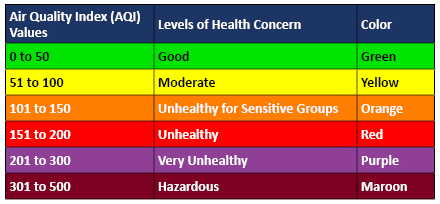
Unhealthy air alert Friday for WI, lake shore counties
A heads-up Friday for people in the lakeshore counties. Highlighted links may contain useful information, updates, etc.
|
A heads-up Friday for people in the lakeshore counties. Highlighted links may contain useful information, updates, etc.
|
The Man from Clear LakeThe contrast with how far away from his legacies and through how much toxic and partisan mud we've been dragged - - and for whom - - is as obvious as is the need to begin repairing all that on election day, November 6th, 2018, or what we in Wisconsin should be calling Earth Day 2018 2.0.
Earth Day Founder Senator Gaylord Nelson
Idealizing a distant wilderness too often means not idealizing the environment in which we actually live, the landscape that for better or worse we call home...
That is why, when I think of the times I myself have come closest to experiencing what I might call the sacred in nature, I often find myself remembering wild places much closer to home...the wildness in our own backyards, of the nature that is all around us if only we have eyes to see it.Part of why that "if only we have eyes to see it" stays with me is that my late friend and Milwaukee Journal newsroom colleague Tim Cuprisin had said much the same thing when he found out in 2010 that he had the cancer which took his life the next year at age 53.

It was a pleasure to see this report in The Sheboygan Press about a local group's battle to protect acreage within Kohler Andrae State Park and in an adjoining pristine nature preserve along Lake Michigan from golf course construction:
'We’re still here. The golf course isn’t.’: Local group receives Sierra Club award for work to protect Sheboygan coastal ecosystem
Kohler Co. applied to remove the trees on more than half its property and fill about 4 acres of wetlands for its 250-acre proposed golf course. Deforestation, as well as the application of pesticides and fertilizer on the golf course, are likely to have further impacts on wetlands, groundwater and other water sources, according to testimony from DNR staff.
I have been writing about this struggle since 2014. And given the climate crisis which is burning and flooding Planet Earth right before our very eyes - along with advances in scientific knowledge especially about the value of trees - it behooves governments to follow and encourage groups like Friends of the Black River Forest to make natural resource preservation a defining imperative.
In other words: tens of thousands of trees, wetlands, rare sand dunes, wildlife habitat and Native American artifacts should not be clearcut -

- bulldozed, paved or otherwise 'developed.'
Regrettably, the proposed golf course is just one of several high-profile projects in Wisconsin that runs contrary to what we need right now: strengthened forests, cleaner air and protected waters which all living things on a sustainable planet cannot do without.
So props to Friends of the Black River Forest and to the Sierra Club for grassroots achievement on behalf of a healthier and greener Lake Michigan, State of Wisconsin and planet.
Tree hugging is in vogue these days - though in key circles belatedly and lackadaisically -
COP26: World leaders promise to end deforestation by 2030
Experts welcomed the move, but warned a previous deal in 2014 had "failed to slow deforestation at all" and commitments needed to be delivered on.
- as our endangered planet is now regularly losing life-sustaining forests at an alarming rate:
California's Dixie Fire is burning its way toward the record books as it nears the devastating milestone of one million acres scorched.
So back at home, is it too much to expect the WI DNR and WI Natural Resources Board -
 |
| Some of actual acreage in Kohler Andrae State Park on which state officials agreed a proposed privately-owned golf course can construct a road and maintenance building. |
- plus other governmental agencies statewide and the State Supreme Court get serious about protecting trees and woodlands instead of cutting them down?
Trees are nature's air & water filters, but a WI project could cut down thousands
And so I return again to the proposed grading and cutting proposed for the privately-owned 247-acre nature preserve adjoining Kohler Andrae State Park along Sheboygan County's Lake Michigan's shoreline dunes.
. Because that's where the number of trees scheduled for removal during two years of projected construction - trees not beset by disease or pests or any natural event - has been estimated roughly at between 30,000-to-45,000, according to a November, 2018 document created by Roger Miller, a local engineer.Letter explaining the Biological Aspects of the proposed golf course, by Roger MillerBased on a quick density count viewing into the edges of the upland forest area of Kohler Company’s 247 acre parcel in Section 14 along the Lake Michigan shoreline in the Town of Wilson, I estimate the number of trees of greater than 6” trunk diameter to be roughly in the range of 50,000 to 70,000.
Kohler’s grading plan for the golf course included on DNR’s website shows that about 63% of that upland forest gets re-graded, which would necessarily remove about 30,000 to 45,000 trees, as a rough estimate, having trunks greater than 6” diameter....There’s also another aspect that seldom gets recognized; bulldozing the rhizome (shallow soil-microbe— fungi-root zone) of the wooded uplands disrupts a complexly interacting environment that takes a long time to develop. This provides virtual “communication” via enzymes, carbohydrate, and mineral exchanges amongst all components of the living surface of the land that ultimately affects plants and tress as well as the mobile insect, animal, and bird components of an ecosystem.
This forest is now about 150 years past it being last lumbered out, although I recall there are some specimen oaks and white pines that may be older. So this area has likely acquired much of the functionality of “old growth....”So the primary adverse effects on the environment of upland deforestation is the loss of quantity and diversity of habitat. This includes the loss of upland ecologic functions critical for the ecologic function of the adjacent wetlands that are not being filled. The golf course plan shows massive grading and deforestation and replacement with fairways right along the edge of great lengths of wetland along the Black River.You can find the letter at a website belonging to Friends of the Black River Forest, here.Miller is also the current chair of the Town of Wilson planning commission.
We are hearing about problems in the supply chain.
Goods are tied up in ports, on ships, and through component and labor shortages.
Not to minimize any of that.
And I would argue that Wisconsin, and others, continue to abuse and further jeopardize an even more-critical supply chain - the clean air, fresh water and life-giving lands we should be guarding and repairing to improve, attract and ensure life here itself.
A lot of what is tied up in the transportation and manufacturing supply chain isn't going to be worth much if people buying these products don't have clean water, fresh air and adequate open space to enjoy and live their lives.
And unless we pay closer attention to this Big or Basic Supply Chain we'll have less of what has given definition and meaning to Wisconsin and its antecedents because selfish special interests aided by complicit government are increasingly breaking, paving, filling, polluting and otherwise handing it over to the rich and powerful for their control and narrow benefit.
Here is a quick list of 10 foundational and interwoven elements of The Big, Basic Supply Chain which needs our fuller attention.
The grandkids are already watching.
Feel free to add more:
1. Clean air. SE Wisconsin's smoggy air would not improve with the nearly 800 annual tons of pollutants quickly awarded Foxconn.
2. Safe rural groundwater. Kewaunee County and the Central Sands water continues to be toxified by nitrate-laden CAFO discharges.
3. Lake Michigan water. Foxconn still has the right to a massive daily draw of Lake Michigan water. Wisconsin continues to award diversion requests while the other Great Lakes states remain mute. And Wisconsin is so used to diverting Great Lakes water that the latest effort began without the required prior authorizations. Who is surprised?
 |
| Lake Michigan north of Milwaukee. @James Rowen photo. |
4. Urban well water. Eau Claire's is contaminated, for sure. Madison's wells have their problems, too. The so-called 'forever contaminants,' know as PFAS compounds, are ubiquitous and Wisconsin legislative Republicans are obstructing rules and regulations that are the legal antidotes.
5. Clean Rivers. The Menominee River could become a mining pollutant-laden supplier of drinking water because Wisconsin intentionally weakened its mining controls.
6. Wetlands. Foxconn has the right to take and fill wetlands more or less as it pleases.
7. Public land. Popular Kohler Andrae State Park may will see acreage inside and at its entrance handed over to a golf course developer. What kind of precedent is that?
8. Endangered species. More Milwaukee County Grounds public green space is slated for 'development,' threatening the sliver of Monarch Butterfly habitat which is all that's left to help this species hang on to a tenuous migrating site here.
9. Threatened species. The state's recent science-snuffing-wolf-killing binge is an abomination. Wolves are the most important forest predator which keeps the natural order in balance. Trapping and shooting the adults during breeding season after teams of dogs have been set against them as was sanctioned by the state less than a year ago was pure cruelty.
10. Respect for elder, Native cultures. You can't miss the pattern of what's under pressure and outright attack - whether it's the vital Menominee River, ancestral artifacts and burial mounds inside Kohler Andrae State Park, or at the expense of wolves considered sacred by Ojibwe tribes who had spent years protecting from seizure their treaty rights to walleye and life-affirming wild-rice estuaries.
You could de-congest all the ports and unload Wisconsin's share for super fast delivery to businesses and homes in the Badger State, but Wisconsin and our future as the climate crisis unfolds will continue to degrade until policy-makers put Public Trust water, air, land and wildlife first.
It is exceedingly ironic and downright karmic that the Dane County judge who blocked the DNR-approved wolf hunt set to begin in two weeks based his ruling on the agency's reliance for wolf hunting planning and implementation -

- on an outdated emergency rule in force for nine years - though that emergency (read: temporary) rule was created and used when Walker appointee Cathy Stepp ran the agency after having publicly blasted emergency rule-making in a blog posting she wrote not long before her appointment by Scott Walker.
Her posting is no longer online, but....
I'd cited it several times because it showed her unapologetic and sneering contempt for the very agency she would run.
And note that the same rule-making procedure Stepp had objected to on partisan grounds - yet was fine with when the DNR needed a sharp tool to craft and run wolf hunts with quota-busting overkills between 2012 - 2014, and repeated last year in 2020 after she had retired, too - was at the center of DNR policies which a judge said Friday rendered wolf hunting - for now - an unconstitutional Wisconsin activity.
I'd copied out Stepp's blog item several times. Here's one example, with her item reproduced, verbatim:
JUNE 26, 2009
And Another "Do As I Say" Moment...
Those of you that haven't had the pleasure of peeking behind the scenes of our state agencies like DNR, Health and Family Services, etc...need to know how some of the most far-reaching policies come down on our heads.The most crushing/controversial rules that businesses have to follow in our state are--most times--done through the "rule making process" of our state agencies. Without bogging everyone down with some really boring procedure talk, suffice it to say that many of these great ideas (sarcasm) come from deep inside the agencies and tend to be reflections of that agency's culture.For example, people who go to work for the DNR's land, waste, and water bureaus tend to be anti-development, anti-transportation, and pro-garter snakes, karner blue butterflies, etc...This is in their nature; their make-up and DNA. So, since they're unelected bureaucrats who have only their cubicle walls to bounce ideas off of, they tend to come up with some pretty outrageous stuff that those of us in the real world have to contend with.I could go on and on with examples of some of the most ridiculous stuff I've seen come down the pike, (no pun intended), but for the purposes of this post, I am going to pull out a quote from the Legislative Fiscal Bureau's summary report on the outcome of the "budget negotiations" that legislative democrats had with each other. (Note: I said with "each other." There were no republican ideas or motions accepted AT ALL during the Conference Committee process. No surprise there.)When an agency sees an urgent need--example would be Chronic Wasting Disease management plans--they're allowed to implement an Emergency Rule. Understandable, since these ideas get an urgent run through the Joint Committee to Review Administrative Rules (affectionately known as JCRAR) without much public notice or scrutiny. The process is there to address emergencies ONLY.Well, sometimes agencies try to use this process as an end-around the legislative process to implement Rules, which end up having the same affect as Laws. (Those of you who have piers in lakes or culverts at the end of your driveways have probaby experienced these Rules.)O'k, I went waaay wordier than I intended, but here's some language that was inserted into this BudgetPig that should scare everyone--regarding one of our agencies, the Department of Commerce: "it may promulgate the initial rules as emergency rules without the finding of emergency."Why should this scare you? When (not if, I said WHEN) they give this authority to the DNR there will be more of a whooshing sound as businesses run for the borders.It's always the fine print in these things that have the heaviest hit.Just another example of the democrats game plan: Change the Rules to Fit the Players.Shout it with me, now: HYPOCRISY, THY NAME IS DEMOCRAT.
Milwaukee Journal Sentinel reporter Paul Smith does a fine job explaining the interagency battle between the WI DNR and its oversight Natural Resources Board, (NRB), that led the DNR Monday to substantially reduce the state's upcoming and sanctioned wolf-killing.
It's the first time the DNR has altered a quota after the NRB had voted on one, according to long-time DNR employees, past board members and the agency itself.
The action underscores the contentious relationship between top department officials and a majority of the current board.
It's also the latest salvo in an ongoing dispute over wolf management in the state.
The NRB, the seven-member citizen board that sets policy for the DNR, voted at its Aug. 11 meeting for a 300 wolf quota.
The decision by a 5-2 vote overruled a DNR recommendation of 130.
Note that both Native American tribes and environmental groups have sued to prevent the upcoming Wisconsin wolf kill - and props to the opponents for standing their ground and fighting to minimize if not end this state-sanctioned barbarism - but I expect the NRB and hunter/gun rights groups to sue to overturn the DNR's move.
And whether it's the DNR's 130 or the NRB's 300 - and while the tribal allotments will save some wolves - a lot of these important natural forest regulators are going to be trapped, shot and killed.
I would add below a few additional facts and matters, especially about DNR kill quotas:
* There have been four state-sanctioned Wisconsin wolf hunts since 2012 and the kill totals in every one exceeded the DNR's quota, with the February, 2021 slaughter being the most brutal.
At least 216 wolves were killed in less than 60 hours, exceeding the state quota of 119 and prompting Wisconsin to end what was meant to be a one-week hunt four days early, according to the Wisconsin Department of Natural Resources.
It's important to understand that these so-called quotas have been repeatedly broken. I've been writing about these realities since 2014:
The DNR says...it's impossible to hit the number precisely because hunters are allowed 24 hours to phone in their sniping, trapping and head-shot successes, and, to date, DNR officials have not closed out a season by erring on the side of caution.
It's more or less a 'sh** happens' scenario.

Further undermining state quotas: the illegal killing (poaching) that has killed scores of wolves, making the February hunt carried out during wolf-breeding season especially vicious and in no way science based.
* The refusal of Walker-appointee Fred Prehn to step down as NRB chairman when his term expired in the spring, and the GOP-led State Senate's refusal to hold a vote on a replacement member nominated by Gov. Evers continues GOP power-grabbing which began immediately after Democrat Tony Evers defeated Walker in November, 2018 and GOP legislators began removing or weakening gubernatorial powers which Walker and other governors had exercised routinely.
(This pattern was extended when GOP legislators 'convinced' a friendly Wisconsin Supreme Court in May to restrict Evers' ability to manage the COVID-19 pandemic.)
* One more item: While it's unclear if or at what level Wisconsin's November wolf hunt will unfold, the state's tolerance and support for wolf-hound sanctioned fighting - eight hounds depredated alone in Bayfield County since August 8 - continues under the guise of bear-hunting field training.
And when hounds run off-leash through wolf territory to a gruesome death, Wisconsin pays the hounders $2,500. Even to scofflaws.
With so little concern for dogs, do we really expect the state to value its wolves?
'I'm shocked that Mt. Pleasant, nestled in the fake Racine County region of Wisconsin Valley will not be home to an electric vehicle plant' -
Foxconn to buy Ohio plant to make electric vehicles, future for Wisconsin facility uncertain
said absolutely no one - as the financially and environmentally costly four-year+ Foxconn fantasy fiasco detailed at this archive slogs on:
A Foxconn Fever primer[Updated continuously from June, 2017]
This 400-item archive has tracked, explained and provided context and commentary for Wisconsin's publicly-awarded and record-breaking package of environmental favors, legal privileges and $4.5 billion in state and local funds to subsidize and assist a Taiwan-based Foxconn factory in rural Racine County, Wisconsin.
Milwaukeeans and residents statewide can take an action step Tuesday to confront two crises: burgeoning climate change-driven calamities which are flooding media and large swaths of the country, and systematic transportation service deficits in Southeastern Wisconsin which continue to fuel environmental and workforce injustices, too.
To strengthen the economies of the region’s metropolitan areas, the Great Lakes states and the federal government should:
• Design and embrace a new competitive vision for transportation policy that includes high speed rail, greater access to ports and freight hubs, and better maintenance and preservation of existing highway and transit systems
• Rebuild the region’s crumbling water and sewer infrastructure based on a thorough assessment of regional needs and a “fix-it-first” funding strategy that prioritizes existing systems in established communities.
• Reinvest in cities and older communities by targeting infrastructure and economic development funding toward catalytic urban projects and revamping federal policies that concentrate the poor in decaying urban neighborhoods
I am adding to this [2019] post about environmental justice and government-enabled discriminatory planning in SE WI the schedule of an important television documentary about the destruction of African-American homes, business and neighborhood cohesion by I-43 construction from Milwaukee to the northern suburbs....
Say "No" to WisDOT's Billion-Dollar -I-94 Boondoggle
There is no constituency or true priority for, and zero fit with environmental justice and climate science facts and agendas to justify rebooting the Story Hill-area I-94 expansion which even road-building-boosting Walker had abandoned.
Why are we still dreaming about adding expensive 'freeway' [sic] lanes?

Media advisory: Groups to unveil alternative to I-94 expansion
In response to the proposed expansion of I-94 East West in Milwaukee, a coalition of environmental, faith and transit advocates will hold a virtual press conference on Tuesday, September 14 at 10 a.m. CT to release an alternative, transit-oriented plan that better meets the transportation, accessibility, equity, economic and environmental needs of the greater Milwaukee region.
Leaders from the coalition will share their unique perspectives related to the I-94 expansion and why they are calling for a better solution for Milwaukeeans. The report comes out as the Wisconsin Department of Transportation (WisDOT) begins the public input process for a supplemental environmental review of the proposed highway expansion.
The event will include the following speakers:
Gregg May, Transportation Policy Director, 1000 Friends of Wisconsin
Caressa Givens, Milwaukee Community Programs Manager, Wisconsin Bike Fed
Cheryl Nenn, Riverkeeper, Milwaukee Riverkeeper
Victoria Gillet, Physician and Member, Wisconsin Health Professionals for Climate Action
When:
Tuesday, September 14, 2021 at 10:00 AM CT
Location:
This event will be held via Zoom. Zoom event login for Tuesday, 9/14 at 10:00 AM CT: Click here to attend and use passcode 611467.
Or join by phone by dialing: +1 312 626 6799
Meeting ID: 967 2842 6598 Passcode: 611467
Contact Cassie Steiner, 262 930 3963 or cassandra.steiner@sierraclub.org with any technical questions.
This story and headline hit me between the eyes:
Air pollution shaves off 2.2 years of average life expectancy worldwide
The average person is losing about 2.2 years of life expectancy due to air pollution, according to new research by the University of Chicago’s Energy Policy Institute.
Worse, the obvious dangers of a worldwide addiction to fossil fuels are fed and dealt by big corporations and their servants in public offices are old news as shown by the same Chicago research institute's 2018 report:
EPIC's new Air Quality Life index measures single greatest threat to human health
Fossil fuel-driven particulate air pollution cuts global average life expectancy by 1.8 years per person, according to a new pollution index and accompanying report produced by the Energy Policy Institute at the University of Chicago, [EPIC].
That's a 20%+ jump worldwide in just three years.
* And do you remember that the Wisconsin DNR -
Foxconn's 4 air emission permits go through DNR speed-dating
and the US EPA - separately quickly, and knowingly - had approved allowing more air pollution over Southeastern Wisconsin - where air quality is regularly degraded.
The US EPA's politically-driven loophole created during the previous administration was closed by team Biden, while the Wisconsin DNR's emission permits remain in Foxconn's hands despite production at the Racine County site that 'justified' the permits - or production of any kind - having never begun.
We are so blasé, we are in such denial about the state of the state and the world that publicly-issued permits to add 800 or so tons of air pollutants annually gather as much concern as a potato chip bag lying in the gutter.
* And air quality harmful to people, businesses and life it self is also a byproduct of an expanding wildfire season raging in the US West -
The Rim Fire burned more than 250,000 acres (1,000 km2) of forest near Yosemite National Park, in 2013. (US Gov't. photo, via Wikipedia)
- that right now is as close to Wisconsin as the Minnesota portion of the Boundary waters:
Progress made on northern Minnesota wildfires, but burning could last until snowfall
Climate change is a human-driven crisis, and humans don't have too much time to make a meaningful impact on the head start we've given it.
And people across Louisiana are out of time, thanks to superstorms - wildfires' climate change catastrophic cousin.
These images tell some of that story, and we can only expect next more of this as the Hurricane season, like the west's fire seasons, become more than mere seasonal disasters.
Long-suffering WI well water users from Kewaunee County -
 |
| Previously-reported manure flow from a Kewaunee County farm |
- to citizens in the state's Central Sands who have been systematically ignored by corporately-captured GOP politicians -
Vos, Fitzgerald go to bat for 'existing and expanding CAFO operations'
- will not be surprised by a blockbuster report's data and conclusions:
Water atlas links water pollution to heavy fertilizer use in Illinois, Iowa, Minnesota and Wisconsin
In Illinois, Iowa, Minnesota and Wisconsin, 80 percent of surface water monitors and 83 percent of groundwater monitors with elevated phosphorus levels of at least 100 micrograms per liter, or ug/L, were located in counties where more than 70 percent of cropland is fertilized.
Excess phosphorus in freshwater feeds algae blooms. Not all algae outbreaks are toxic, but those that are can harm humans and animals. And even algae blooms that are not toxic can make waterways unfit for fishing and swimming.
The water atlas confirms previous [Environmental Working Group] investigations revealing that drinking water nitrate contamination is a serious and worsening problem. In the four states, 86 percent of the water systems contaminated with nitrate levels at half or more of the federal legal limit are located in counties where at least 70 percent of the cropland is fertilized.
But I hadn't realized we were part of outsourcing this nasty blend of 'Midwestern Nice' from the US South to the Gulf of Mexico:
Nitrogen and phosphorus runoff from agriculture in [Wisconsin, Minnesota, Iowa and Illinois] is the primary cause of a notorious annual hypoxic zone off the coasts of Louisiana and Texas. During the summer, that part of the Gulf of Mexico is effectively dead, with devastating effects on Gulf fisheries and ecosystems – and the maps show the pollution problem persists.
And then I remember this as recently as 2018:
Dead zones in Green Bay show signs of lasting longer, raising long-term questions
The challenge: Industry and municipal wastewater systems have made big cuts in pollutants that have fed the dead zone. But the lion's share of runoff pollution comes from farms, which face less regulatory pressure to cut back.
"We are definitely moving in the right direction, but it’s still going to be a pretty big lift," said Kevin Fermanich, a professor of environmental science and geoscience at UW-Green Bay. He did not participate in the study.