Showing posts sorted by relevance for query DNR customers. Sort by date Show all posts

Wednesday, May 31, 2017

WI DNR magazine fight reveals empty agency rhetoric

The GOP-led Wisconsin Legislature's budget writing committee votes today on whether to shut down a magazine published since 1918 by the Wisconsin Department of Natural Resources which carries no cost to taxpayers and has more than 82,000 paying subscribers.

I have been raising the alarm about this thoughtless and expensive move since early February:
Walker wipes out DNR magazine, keeps killing agency mission
Though its costs were completely covered by subscribers, and the Wisconsin Natural Resources magazine had a long and useful run, climate change denier Scott Walker and his "chamber of commerce mentality" DNR mission-saboteur Secretary Cathy Stepp are using the state budget to wipe out the credible, high-quality publication that published items like this no longer wanted by official Wisconsin. 
Noted here, and hat tip to both Madison papers for spreading the word:
The Wisconsin State Journal is reporting a spike in orders for the DNR's venerable, 100% subscriber-supported magazineWisconsin Natural Resources magazine cover photo
which Gov. Walker plans to budgetarily scrap as he continues his ideological war on science and the provision of public information:
Props to the Capital Times for the push.
The nearly 1,400 subscription orders came in during an eight-day period after publication of articles in the Wisconsin State Journal and other newspapers about Walker's plan to cut the magazine. 
At the same time, environmental reporter James Rowen used his blog to urge his readers to subscribe.
Initially, the governor's office explained the budget proposal by saying the state shouldn't duplicate privately owned periodicals, but a spokesman hasn't given examples. But three private, Wisconsin-based publishers last week told the State Journal they don't compete with the DNR magazine and didn't ask Walker to eliminate it.
We hear constantly from Republicans like our anti-science Governor that government should be run like a business that listens to its customers.

No one has been more outspoken using this business/customer relationship construct than Stepp, a former developer and Walker's hand-picked "chamber of commerce mentality" DNR Secretary. 
Wisconsin DNR Secretary Cathy Stepp proudly shows off her first deer, taken opening weekend last year. In the upcoming TV Special "Deer Hunt Wisconsin 2012, Stepp urges male hunters to take more girls and women hunting. "The secret's out," she says. "Hunting is a lot of fun, so don't keep it to yourselves."  photo courtesy of Wisconsin DNR Take a look at how she framed a discussion about the ongoing reorganization of the "customer service agency" she runs:
Like any healthy organization striving to remain relevant and responsive to its customers, we spent more than a year evaluating our assets, liabilities and available human and financial resources...
We are a customer service agency that also regulates our customers. That's a unique challenge. Our customers include everyone who lives, works, plays or makes anything here. They all expect clean air and water, robust wildlife, world-class trout streams and first-class parks and forests. All of our customers, taxpaying citizens, license and permit holders and visitors also deserve the best possible return on their investment that we can provide. This alignment plan sets us on the path to accomplish that.
So all DNR customers if you follow her framing have standing and should be served by the agency - - except apparently 82,000 customers willing to pay for a magazine they want customer-based 'business' to keep providing.

Plus - - it will cost more than twice what the administration first claimed to close down the publication, so they are willing to make something that right now costs nothing to publish as a self-supporting enterprise to a nearly negative $800,000 expense to shutter.

The reason Walker wants to shut the magazine down is because its pages have a habit of showing through gorgeous color and evocative wording Wisconsin's disappearing natural beauty - - wetlands, pristine timber, rare dunes and groundwater which feeds springs, rivers, lakes and streams -- which he and his administration are busy filling, draining, clear-cutting, and otherwise transferring to the very special interests which define that "chamber of commerce" mentality. 

Bottom line, as they say in the business world:

Walker and Stepp don't even believe their own b.s.


Wednesday, April 25, 2018

WI DNR adds quick Foxconn water diversion OK to quick air pollution approvals

[Updated from 4:35 p.m.] Former WI DNR Secretary, outspoken business cheerleader and current US EPA Great Lakes regional director Cathy Stepp said last year that Foxconn was everything she and Walker had been hoping for.

Stepp may be gone, but the "chamber of commerce mentality" Walker wanted her to embed there is leading the way, 24/7/365.

To the Wisconsin DNR's unsurprising and speedy approval of Foxconn's air pollution permits yesterday you can add, despite considerable public opposition and concerns from other Great Lakes states an equally unsurprising and lightning-fast Wisconsin DNR green-light today so the company can get diverted Lake Michigan water,
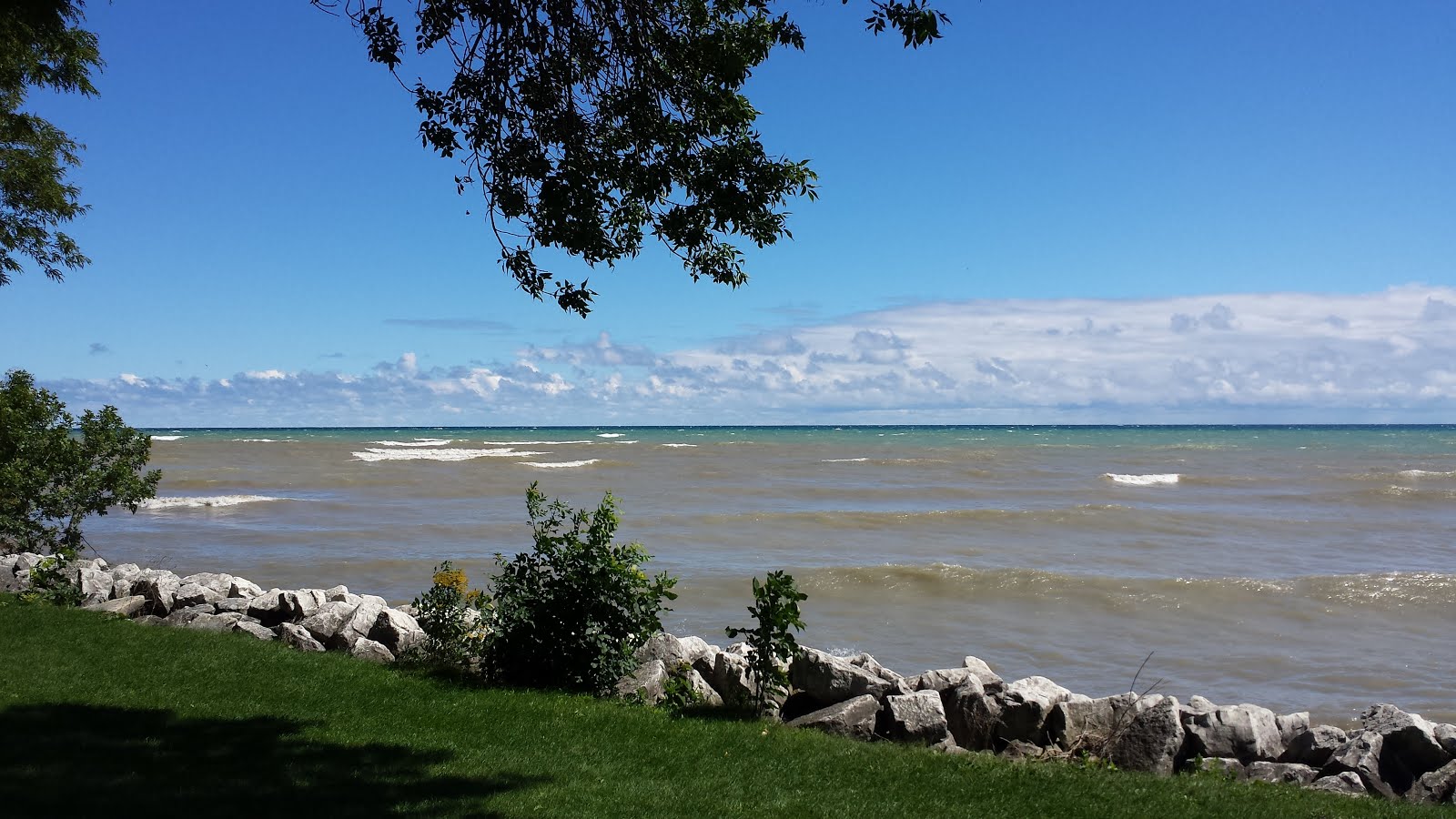
Lake Michigan 
the DNR reports in a 3:04 p.m. email notice, below.

Spoiler alert: while comments in opposition predictably fell on deaf ears, the DNR thanks you for your input:
The department has taken the comments under consideration in issuing the approval and drafted a comment and response document available by searching the DNR website, dnr.wi.gov for keywords "Racine diversion." 
"We received approximately 800 comments on the Racine application, which shows the public's strong interest in this topic," said Adam Freihoefer, water use section chief for the Bureau of Drinking Water and Groundwater. "We appreciate the public's involvement and I thank those who took the time to comment."

Update: Note that I mentioned earlier this month that Walker had smoothed the way for Foxconn by positioning Atty. Matt Moroney, a former Walker staffer and Deputy to DNR Secretary Stepp for four years as the state's coordinating point man for Foxconn:
And do not forget that he has installed as the state's Foxconn project liaison Attorney Matt Moroney, a Governor's office senior staffer and former DNR Deputy Secretary who, prior to his Walker administration service was a builders' association official who had opposed the Great Lakes Compact's diversion exceptions as impediments to business...
And also understand that a state judge recently made a strong ruling in support of the Public Trust Doctrine, the Wisconsin Constitutional Article IX language which mandates that a) Wisconsin's waters by right belong to everyone and, b) the DNR is duty-bound as the people's trustee to protect that right and preserve access to state waters for the public's benefit.
[Dane County Circuit Court] Circuit Judge Valerie Bailey-Rihn ruled that the ]groundwater' permits ran afoul of a constitutional provision requiring state government to protect water for the public.
“This Court is bound by nearly 120 years of precedent and a long rich history in the State of respecting the Wisconsin Constitution and its fundamental protection of the waters of the State for the enjoyment of all,” Bailey-Rihn wrote in a decision she issued Wednesday.
So: Stay tuned, and involved. 
-------------------------------------------------------------------------

Contact(s): Jim Dick, DNR Director of Communications, James.Dick@wisconsin.gov608-267-2773

MADISON, Wis. - The Department of Natural Resources issued an approval today allowing the city of Racine to divert an annual average of 7 million gallons a day of water from Lake Michigan for its customers within the village of Mount Pleasant. The village of Mount Pleasant straddles the divide between the Lake Michigan basin and Mississippi River basin.

For perspective, the total surface water withdrawn from Lake Michigan from all states in 2016 was reported as 9.6 billion gallons per day by the Great Lakes Commission. Racine's requested 7 million gallons per day withdrawal would only amount to a 0.07 percent increase in the total surface water withdrawals from Lake Michigan. This withdrawal would still put the Racine water utility under its existing withdrawal capacity and below its 1995 average day water sales number as cited in its application.

Straddling community diversion applications are regulated under the Great Lakes Compact, which took effect in 2008. The process allows communities that straddle the Great Lakes basin divide to apply to divert Great Lakes water.

The village of Mount Pleasant lies predominantly in the Great Lakes basin, and the Racine Water Utility already serves over 5,000 residential customers in the village of Mount Pleasant. 

The diversion approval allows the Racine Water Utility to extend public water service to the 8 percent of the village that is in the Mississippi River basin, partially including the Foxconn facility site. Because Racine's public water system will continue to serve a group of largely residential customers, including the straddling community of Mount Pleasant, the DNR determined that Racine's proposed diversion is for "public water supply purposes."

As part of the diversion approval, the city of Racine must ensure that the diverted water is returned to Lake Michigan minus consumptive use such as evaporation. The water returned to Lake Michigan will be treated at the Racine Wastewater Treatment Plant to meet all applicable state and federal water quality discharge standards. Any industrial customers, such as Foxconn, will work with the City of Racine to meet pretreatment requirements for wastewater.

Again, for perspective, Lake Michigan rose 56.3 inches between January 2013 and August 2017. (NOAA GLERL Dashboard - exit DNR). By comparison, the annual consumptive use water loss caused by the diversion from Lake Michigan would be about .0025 inches or about the thickness of a lightweight (12 bond) sheet of paper.

After receiving the application in January, the DNR invited the public to provide comments on the application, and received public testimony at a hearing in early March in Sturtevant. The department has taken the comments under consideration in issuing the approval and drafted a comment and response document available by searching the DNR website, dnr.wi.gov for keywords "Racine diversion."

"We received approximately 800 comments on the Racine application, which shows the public's strong interest in this topic," said Adam Freihoefer, water use section chief for the Bureau of Drinking Water and Groundwater. "We appreciate the public's involvement and I thank those who took the time to comment."

More information about the Great Lakes Compact is also available by searching dnr.wi.gov for "Great Lakes Compact."
-------------------------------------------------------------------------------------

You might want to try and square the state and DNR actions with regard to Foxconn, the Kohler golf course wetland permit approval and state park land transfer, the Monroe County wetland filling and timber stand destruction permit and a host of additional environmental travesties - - all catalogued here - - with what the DNR still claims as its mission statement:


Lake at sunset
To protect and enhance our natural resources:
our air, land and water;
our wildlife, fish and forests
and the ecosystems that sustain all life.
To provide a healthy, sustainable environment
and a full range of outdoor opportunities.
To ensure the right of all people
to use and enjoy these resources
in their work and leisure.
To work with people
to understand each other's views
and to carry out the public will.
And in this partnership
consider the future
and generations to follow.


Friday, February 17, 2017

Walker's DNR mag kill destroys Stepp's pro-customer mantra, too

The "chamber of commerce mentality" Wisconsin DNR Secretary whom Scott Walker installed atop the agency has been pitching customer service because says the DNR should be run like a business.
Wisconsin DNR Secretary Cathy Stepp proudly shows off her first deer, taken opening weekend last year. In the upcoming TV Special "Deer Hunt Wisconsin 2012, Stepp urges male hunters to take more girls and women hunting. "The secret's out," she says. "Hunting is a lot of fun, so don't keep it to yourselves."  photo courtesy of Wisconsin DNR
So you get things from former home builder and McDonald's manager Cathy Stepp like "DNR has committed to: Measurably increasing customer satisfaction through increased customer outreach and assistance" in a 2011 reorganization plan. an early echo of a 2016 agency "realignment" in which Steps makes the same point and pledge:
In fact, this initiative, based on private sector best business practices, will allow us to focus even more on that responsibility...
We are a customer service agency that also regulates our customers. That's a unique challenge. Our customers include everyone who lives, works, plays or makes anything here. They all expect clean air and water, robust wildlife, world-class trout streams and first-class parks and forests. All of our customers, taxpaying citizens, license and permit holders and visitors also deserve the best possible return on their investment that we can provide. This alignment plan sets us on the path to accomplish that.
"All of our customers...," well not all, because Walker plans to wipe out the DNR's subscriber-based, long-standing bi-monthly magazine with at least 75,000 subscribers, er customers - - many of who have signed up regularly for two and three-year commitments.

What kind of customer-driven, best-business practice-centered operation intentionally insults 75,000 paying customers by killing a popular product while offering weak explanations for the decision?


Customers need to fight back.

Subscribe NOW.


Wednesday, May 9, 2012

River Alliance Of Wisconsin Steps Into Current Stepp Controversy

What "The River Rat" writes for the River Alliance of Wisconsin is always a fine read.

That Smell of Sewage, and of Shirking Responsibility

This business of the Wisconsin Dept. of Natural Resources cutting slack to a septic waste hauler smells, well, like raw sewage. 

DNR Secretary Cathy Stepp’s responses have gone from defensiveness, to shooting the messenger (criticizing the Wisconsin State Journal for, essentially, doing what a good newspaper does), to proposing that DNR political appointees reveal if they got campaign contributions from someone they expect to regulate. 

Rat will take up the stinky problem of “septage” spreading on farmland in a minute, but first – to the almost-as-stinky proposal by Secretary Stepp to “fix” this problem by having agency staff reveal conflicts of interest they might have with people they should regulate. 

This assumes that DNR is run by people who get campaign contributions. The fact is, very few people, even political appointees, are in a position to get campaign contributions that would affect their decisions at the agency.  
This “fix” is a smokescreen.  The underlying problem with the DNR is its single-minded focus on serving the “customer,” whom the current regime sees as business people who should not be regulated, and the DNR’s job is to clear regulatory brush out of their way.  This mentality overlooks an essential fact:  that ALL citizens of the state are DNR’s “customers.”  The agency’s job is to protect the resource.  By giving this septic waste hauler a pass for violating state law, they were willing to risk contaminating the wells of other “customers” – those people whose houses adjoined the fields where the septic waste was illegally spread.

One not unreasonable excuse Stepp gave for lax enforcement by DNR since Scott Walker was elected was a lack of staff.  But the Walker administration has no intention of beefing up enforcement of polluters.  Gov. Walker defended the DNR's actions on the septic waste incident in a statement last week, and in a recent email invitation to environmental groups to discuss the DNR’s upcoming budget, the Governor’s office told us we should come to the meeting with these “guiding principles” in mind:  

“….not spending money that the state doesn’t have; smaller government is better government; and people create jobs, not government.”  

Translation:  don’t come asking for more DNR staff, and don’t ask us to enforce the law. 

Speaking of laws– those regulating the spreading of liquid waste, colloquially known as “sludge” –spreading sludge on farmland is legal, and is mildly regulated by DNR.  State and county conservation staffers who work with sludge haulers say that while municipalities and industries can generally be trusted to play by the rules, the guys hauling septic wastes are often cowboys – flaunting the rules and not bothering with the paperwork required.  

A simple policy solution to that problem would be to send all septic wastes to the nearest municipal sewage treatment plant, rather than spreading it, raw and untreated, on farmland.

Even with that change, we need a DNR willing to enforce the law. We’ll see if DNR can give a credible response to what’s been exposed, through this stinky incident, about its official mindset. 

Sunday, May 15, 2011

Pro-Business DNR "Charter" Agency, Wisconsin's First, Could Be Announced This Week, DNR Draft Memo Says

[This memo may be the same one referenced in this Journal Sentinel story. There are some glitches in the reproduction,  such as a year-by-year chart that did not reproduce properly showing declining numbers of employees, but I wanted to put it up as it was received.  If I can get a URL to the file, I will re-post that.]

Charter Agency/Organizational Update Communication Plan

DRAFT- May 9 Organizational Effectiveness Communication Plan

Talking points: CHARTER AGENCY

By Executive Order, Gov. Scott Walker today designated DNR as Wisconsin government's first Charter Agency pilot.

• Under the charter concept, DNR will be given increased operating flexibility to enable the agency to improve customer service and business support, as well as enhance its natural resources mission.

•    The pilot will be for the 2011-13 biennium.

Under the Charter, DNR has committed to: o Measurably increasing customer satisfaction through increased cllstomer outreach and assistnnce; development of on-line permitting options, and expanding,()v,er the counter service;.,    , .    .
o Improving cost-effectiveness by duplicative systems and lower priority ,work and reducing overhead and operational costs for facilities management.rent,    ti-avd ---.. and other basic operations;
outreach and assistance and expanding improving DNR's website;
Deleted: through increased customer
Deleted:    to    the    public    by    30% and
Deleted: eliminating non-essential
Deleted: by 2.5%
o Improving management systems to reduce permit times for major air and water permitsj _..    _    Deleted: by 10%;.
o Maintaining employee salary and fringe costs below 90% of authorized levels for fiseal year 20 I 1.
Formatted: Indent: Left: 0.25" ~-
To achieve these goals, DNR will be given management discretion in: ': -"OV<--\-' I.

• Recruitment and retention of high performing employees;    ,/    0 o DNR will be able t9 utilize merit compensation tools to reward excellence,
• •

and retain attract talent;

o    DNR will be exeml)ted from the state centralized position review ~
Work force alignment - to shift the resources to areas of permit backlogs;-7
Fleet operations;
o Something staff repeatedly asked for in talks with the Secretary's office
o    We will be able to right size and equip vehicles for our tasks.
( a:~rmatted: \-"'"    '    . -    ...;
Bullets an~ Numbering
,5
• Facilities operation and construction;
Charter Agency/OrganIzational Update CommunIcation Plan

o DNR able to pursue cost-savings at facilities without DOA over-sight. Information technology; and
, ...-
r J
•Initial management strategies for the new Charter Agency include:implementing//\ a line authority system in the agency to improve consistency and accountability;    ~) using "Smart Regulation" principals for all environmental programs; setting uniform performance expectations for staff and supervisors; and implementing bi -annual program audits.

The Charter Agency concept has been recently utilized by Iowa and Washington states.

o Both states pursued innovative strategies to achieve better results within government by testing the hypothesis: Given greater operating flexibility, Charter Agencies will be able to produce better outcomes for their customers at less costs than under the standard bureaucratic system.
o The Wisconsin DNR Charter Agency concept is modeled after the best elements of those two state programs, but with less bureaucracy involved. The aim is positive outcomes and improvements, not red-tape. That's the whole point.

UPDATED ORGANIZATION With shrinking budget and staff resources, DNR can no longer sustain the organizational structure adopted by the agency in the mid- 1990's.
• The reality is resources will likely re~;~;-;;'st~tic or continue to shrink, mandating new ways to get out work don    DNR FTE    ave gone down from a high of 3,114 positions in 1995 to 2,670 today.
• Purchasing and procurement.
r:
1995
~
3,114
3,114
1997
2,906
1999
2,932
2001
3,001
2003
2,975
2005
2,824
2008
2,714
2009

2
Charter Agency/Organizational Update Communication Plan

2,746 2,670    2,670
When the line/staff model was developed - there was no Internet, no email.no live meeting, no cell phones, no voice mail- in short, having in office supervisors was critical to coordination.    New tools reduce that need.


2011
• Multiple administrations have recognized the need to modify our reporting structure; work on changes to line staff began last fall and were continued under the new Secretary.
• Updating must include increased operating flexibility in order to produce better outcomes for its customers at less cost than under the standard bureaucratic system.
• Our core natural resource management and environmental protection mission must be fulfilled
The updated organization emphasizes:
o Updating organizational processes as well are organizational structure
o Process consistency in both application of regulations and in permitting actions; the modified organization can help improve consistency.
o Input -- each division's management team - which includes managers from field and central office -- provided input on organizational changes based on its knowledge of their programs' work.
o Maintaining working relationships will be maintained and most employees will see little change in their day to day work who they report to may change.

No layoffs as part of the realignment. We will try to avoid any demotions or forced moves.
Close working relationship of regional directors and Secretary.
o They will report directly to the Secretary [unlike in the past] in an enhanced role
in the agency.

o Their knowledge of staff and programs puts them in a unique position of guiding economic development to achieve enhanced environmental outcomes.
~';>~~i,jSEt.)jfPv'f~s:$~~I.rmm;>m)T
Increased attention to organizational and process effectiveness,
• A new position in the Secretary's Office -

AI Shea heading an Office of Business Support and Sustainability will provide the tools and help needed to support

3
Charter Agency/Organizational Update Communication Plan
business vitality, improve organizational effectiveness and customer service, and
focus on sustainability.
• Regional Directors will create and direct sector teams to pull together experts to deal with shared issues in a particular sector

Benefits:

•    DNR's mission to protect and enhance the environment is better supported
• DNR will have increased operational flexibility
•    Changes should result in "more boots on the ground" and staff having more hands-on duties and less paperwork
•    Wis. businesses have a responsive and accountable partner in business development;
•    DNR regulatory decisions are consistent and transparent to the public;
•    Customer service and access to the DNR is greatly improved; and o    Staff-especially  in the northern part of the state - asked for expanding over the counter service hours • Efficiencies and cost-savings are enabled through reduced bureaucracy.
~ ~ncourages    developing Internet-based tools to streamline and more effectively track permit applications.

Efficiencies can result in better environmental outcomes, freeing staff for more field inspections and assistance to the business community in getting to compliance

CHARTER AGENCY MEASUREABLES:

The move will have the following measurables:
~ FTE - Filled FTE and salary & fringe costs will be maintained at or below 95% of authorized levels for fiscal year 20 II. Operating Budgets - Goal of reducing operating costs by 2.5% over 20 I0 base
}> ,Yj:ar..fuJ:.D~#«:.s..t:management, rent, travel, and other basic operations. Customer Service - ver-the-counter service will be increased by 30% over

Reduced Permitting Times - Goal of reducing average permitting times by o    'or air a d water permits.
Customer Satisfaction Measurable customer service bench marks are estab IS e or se ected critical business functions (by Ist quarter); improvement goals are established (by 2"d quarter) and measured (years I -4).

COMMINICATION PLAN Tools: • Draft Governor's office release and talking points (Done)

4
Charter Agency/Organizational Update Communication Plan
• • • • • • • • • • • •
Summary for external audiences

legislators (Done) Video from Secretary's office (Scripted drafted; Cathy, CSL) Streamed LIVE Q/A (Cathy, DLT, CSL, OC-to    be scheduled) Emailed Timetable and Overview summary with overall org chart (Shea) Divisional summaries (Division administrators) General trade publication information article (OC) UPDA TED DNR electronic staff directory by county (CSL) Division and office meetings (divisions)

I on 1briefings   (DLT) Fact sheet on the new Office of Business Support and Sustainability (SHEA, OC) Cathy email on the role of region directors (Cathy, Shea, HR) HR summary of civil service impacts (HR)

Internal Communication: Starting on approval and timed with the Governor's external release:

I. Simultaneous to Governor's announcement: Video to staff followed immediately by written summary and timetable by email (new org chart to be available to illustrate)
2. Day or so later, streamed Q/A with secretary's staff (common questions etc. to be handled in a resulting DNR Digest article)
3. Secretary's office makes rounds of regional and GEF 2 office starting the day after the telephone press conference (schedule to be determined ASAP)
4. Meetings with RMTs and division management teams
5. HR briefs union representatives; provides civil service impact summary
6. [N/A] IF ANYONE IS DISPLACED, 1:1 meetings with supervisors and HR
7. Bureau meetings-including  field staff in person or by Live Meeting.
8. Regional meetings in Service Center offices? (by program?)
9. Build reference materials page of MyDNR, all in one place not divided by program
10. Place for staff to send questions/comments  established and staffed
11. Identification and sharing of additional implementation steps
12. Regular communication of management system upgrades/changes/tools for staff and managers

External Communication:

I. Pre-announcement: Development of speaking points, release and announcement plans with the Governor's office (Done)
2. Governor's Press Conference: Supportive legislators and business/external organization supporters to stand with Governor in conference room (Press office/Shea)
3. Immediately preceding announcement: One-on-one briefings with NRB members (prior to announcement,) Legislative committee leadership; Conservation Congress leadership.
4. Immediately after announcement: Briefkey constituencies like WMC, WWF, environmental org leadership; GLIFWC; federal agencies (if affected)
5. Spokesperson appointed - AI Shea (OC) 6. Briefings with partner agencies that would have an interest - especially EPA

Charter Agency/Organizational Update Communication Plan

7. Immediately following Governor's announcement: Telephone press conference with news media, concurrent with legislative announcement. (OC to schedule and invite)
8. ONLY IF NEEDED: Stepp Op-Ed piece distributed to news media day of Governor's press conference
9. Partners encouraged to provided supportive statements to the media - DNR should have a list of partners to refer media too. Partners might consider op-ed or supportive statements out on close quarters. (Governor's, Secretary's office)
10. Programs brainstorm and notify key constituencies/work relationships of changes, if any
II. Regional directors share summary with county and local elected officials, brief key local officials and organizations
12. Feedback loop established and monitored for implementation glitches
13. News media with regular DNR beats briefed as necessary
14. Regional news releases, if necessary
15. IMPROVED staff directory organized by staff responsibilities by county in place and
available
16. WEB contact us information updated
17. Regional directors contact local business organizations
18. General informational article provided to partner groups for their newsletters: WMC,
towns and counties associations, Conservation Congress; Gathering Waters/Lakes associations; LCV; WWF; etc.

Timetable:
• Needs to be determined in consultation with the Governor's office and uniform
throughout agency.-- Anticipated week of May 16 • Recommend internal rollout simultaneous to Governor's external annoucement
• Do we need to factor in the time frame that HR needs to get the materials appointment letters, etc.) done before the switch can be flipped?

Addendum A.

Wisconsin Is Open For Business Proposal: DNR as first Charter Agency In Wisconsin

The Charter Concept: Given increased operating flexibility, the DNR will be able to produce better outcomes for its customers at less cost than under the standard bureaucratic system.
Key Benefits: While ensuring that our core natural resource management and environmental protection mission is fulfilled:

>- Wis. businesses have a responsive and accountable partner in business development;
>- DNR regulatory decisions are consistent and transparent to the public;

6

Charter Agency/Organizational Update Communication Plan

» Customer service and access to the DNR is greatly improved; and » Efficiencies and cost-savings are enabled through reduced bureaucracy. » DNR staff is involved earlier in the process through the Office of Business Support and Sustainability to allow opportunities for environmental    enhancement.
Specific Elements of the Charter:»

Improve accountability by implementing ... Line authority;
"Smart Regulation" principals for all environmental programs; Uniform performance expectations for staff and supervisors; and Bi -annual program audits.

» Improve Customer Service by ... Increasing counter service; Improving the Department's web-site; Providing customer service training for key front-line staff; Identifying customer service performance expectations in all DNR staff evaluations.

» Improve    Cost-Effectiveness    by ... Focusing on highest priority work and eliminating non-essential work; Reducing over-head and operational costs; Consolidating facilities; and Expanding profit centers.

» Improve Management Systems to ensure ... Integrated natural resource decision-making; Excellence in internal and external communications; Wisest use of information technology to assist in streamlined delivery of services; and

Measurement of progress in meeting goals in all major programmatic areas. following measurables:
• Charter Measurables: Pilot is for 2011-13 and 2013-15 bienniums and has the
» FTE - Filled FTE and salary & fringe costs will be maintained at or below 95% of authorized levels for fiscal year 20 II.

» Operating    Budgets - Goal of reducing operating costs by 2.5% over 20 I 0 base year for facilities management, rent, travel, and other basic operations.

» Customer Service - Over-the-counter service will be increased by 30% over 2010 base year.
Charter Agency/Organizational    Update Communication Plan

» Reduced Permitting Times - Goal of reducing average permitting times by 10% for major air and water permits.

» Customer Satisfaction - Measurable customer service bench marks are established for selected critical business functions (by Ist quarter); improvement goals are established (by 2nd quarter) and measured (years I -4).
Tools Needed:

Organizationa lcomplan.doc Draft 7 Irs May 9, 2011

» » » » » »
Hiring Discretion - DNR exempt from CPR process for hiring permanent,    project,    seasonal    and    L TE    positions;

Work Force Management Discretion - DNR given broader discretion to shift its workforce to meet chalJenges or meet new business opportunities.

Merit Tools Discretion - DNR able to utilize DCA and DCP tools to reward excellence, and retain attract talent; Fleet Management - DNR able to manage travel and fleet operations outside of DOA over-sight;

Information Technology - DNR able to pursue development and use of IT tools without meeting statewide enterprise barriers; and Facilities Management - DNR able to pursue cost-savings at facilities without DOA over-sight.

Thursday, February 23, 2017

WI DNR climate change censors continue deleting

Along with the agency's Great Lakes climate science web page and earlier global warning material scrubbing, Scott Walker's anti-science Department of Natural Resources "chamber of commerce mentality" top management - -  
Wisconsin DNR Secretary Cathy Stepp proudly shows off her first deer, taken opening weekend last year. In the upcoming TV Special "Deer Hunt Wisconsin 2012, Stepp urges male hunters to take more girls and women hunting. "The secret's out," she says. "Hunting is a lot of fun, so don't keep it to yourselves."  photo courtesy of Wisconsin DNR
- - has also deleted several climate change and science web pages from the children's education resource program known as EEK!, including a teachers' activity guide and K-12 information, here.

Those links bring up the dreaded "Page Not Found - - the Web page that you are looking for is no longer on the server. Please check the page location. If you had this page bookmarked, please remove the bookmark from your browser."

Some of this has been reported earlier and Sacha Ericaceae through Facebook called it to my attention in January, so with this post I want to to catch up on the matter now.

Still on the DNR website, however - - so you might want to save this post and all the useful links - - is this information-rich page about tree planting as a climate change antidote - - full text below.

Most of the links are external to the DNR, but information distribution about climate change can still be performed unwittingly by this agency - - like this Canadian educational program about climate change for children - - even as it scrubs pages and will lose its popular magazine provided for 99 years and enjoyed now by tens of thousands of satisfied customers if Scott Walker gets his way.

----------------------------------------------------------------------

Youth and school planting projects


Example of free seedlings available from the state nursery; 3-year old white spruce
Take action! Motivate kids to plant trees as a classroom or community project.

Climate change lesson plans

Motivate students! Bring climate change concepts and activities into your classroom.

Climate change activities

Reduce your carbon footprint!

Climate change information

Be informed! Learn what’s happening with climate change.
Youngsters help plant street trees in Sparta.

Carbon calculators

Calculate your impact! Carbon sequestration is the process by which atmospheric carbon dioxide is absorbed by trees through photosynthesis and stored as carbon in biomass (branches, foliage, roots) and soils.

Friday, July 28, 2017

Diminished, degraded WI DNR faces daunting Foxconn review

A suggestion:

The Wisconsin Legislature should add permit reviewers, inspectors and related technical staff in the 2017-'19 budget it has yet to approve for the Department of Natural Resources it has helped to downgrade because the agency will have to review and inspect an historically-large potential Foxconn project site or sites "three times the size of the Pentagon."

The reality: Nah.

Though a downsized and demoralized Wisconsin DNR is an intended consequence of the Scott Walker/Cathy Stepp mission-killing withdrawal of public interest governance at the Wisconsin DNR,  I appreciated the Milwaukee Journal Sentinel's cataloguing of permits and environmental tasks facing the diminished agency when it reviews the proposed Foxconn project site described alternately as the size of the entire Village of Shorewood, a Milwaukee suburb.

Wisconsin DNR Secretary Cathy Stepp proudly shows off her first deer, taken opening weekend last year. In the upcoming TV Special "Deer Hunt Wisconsin 2012, Stepp urges male hunters to take more girls and women hunting. "The secret's out," she says. "Hunting is a lot of fun, so don't keep it to yourselves."  photo courtesy of Wisconsin DNR

As the Journal Sentinel reports, there will be  wetlands, clean water, land use, wastewater, clean air and other project permit basics which the DNR should review, though Walker and Stepp's known 'chamber of commerce' approach to anti-pollution inspections and enforcement suggest that the DNR will struggle to do its job for the people, or could turn it over to Foxconn itself in line with Walker-era-DNR proposals to enable more laissez-faire, company-led environmental compliance in Wisconsin.


By way of comparison, note that an audit not long ago found that the DNR had a habit of ignoring its own anti-pollution inspection rules.


To which Stepp responded by blaming budget cuts and work rules, pining for the easier time she had coordinating workers with tasks and rules having managed managed a fast-food chain restaurant: 

The [Natural Resources] Board was questioning Stepp and her top administrators about a Legislative Audit Bureau report released this month showing that over the past 10 years the DNR failed 94 percent of the time to take enforcement action against private industries and municipal sewage plants that exceeded water pollution limits, violating its own internal policies.
DNR employees didn’t have time to review reports from polluters, weren’t reissuing discharge permits with updated standards on a timely basis, and frequently failed to meet the department’s own standards for inspections and enforcement action against polluters.
Stepp recalled her days as McDonald’s restaurant manager as she talked about how state employment rules that have hobbled the DNR. Stepp said she could quickly mobilize her fast-food employees when a busload of customers arrived unexpectedly, but the DNR can’t react that nimbly to retirements.
And project permit applications filed with the DNR can drag on and on and on.

For example, the agency has yet to cajole all the relevant permit information in needs after nearly two-and-a-half-years from the Iowa firm which wants to construct a 26,000 pig feedlot and manure producing operation within smelling distance of Lake Superior and the City of Ashland's drinking water supply.


Another example: the DNR got initial paperwork from Kohler interests in April, 2015 about its controversial plan to convert a nature preserve along Lake Michigan into a golf course, but only submitted its first of several formal permit applications nearly two years later, the DNR reports:

The Kohler Company submitted a wetland permit application to the department on March 8, 2017. Wetland permitting documents
So how will the DNR with fewer staffers cope with the multiple demands posed by Foxconn, and what happens to so many ongoing project reviews and routine obligations if staffers are pulled for Foxconn project needs?

Monday, March 12, 2018

Walker has debased WI agency reviewing Foxconn water ask

[Updated from 3/8-9,12/16] You have until March 21 to send the Wisconsin Department of Natural Resources your thoughts - - email, regular mail directions, here - - on the application to the DNR for the green-light to divert 7 million gallons a day of Lake Michigan water to GOP Gov. Scott Walker's beloved, budget-busting project for Foxconn - - a private business headquartered in Taiwan.

This is the same project financed with record-breaking state subsidies organized by Walker and his compliant, GOP-led state legislature where excavation, paving and building on 3,000 acres of Racine County farmland, wetlands, lake beds and stream courses has been exempted through precedent-setting special-interest legislation from routine state environmental assessments and permit requirements.

Here is a full Foxconn archive back to day one.

3/12 update - - More on Wisconsin's environmental outlier status, here.

So, yes, it's important to send in your comments and build a strong record in favor of water conservation and Great Lakes integrity - - despite plenty of reasons to believe that the approval is in the bag - - but also without any illusions.

The diversion application - - to be reviewed by, and receive its up or down ruling from, the DNR and only the DNR - - also seeks DNR approval for Foxconn's flat-screen panel production processes to use consumptively about 40% of its daily diversion, with the balance returned to the lake properly treated.

Here's an overriding thought about all this to consider alongside two others I wrote about Wednesday:

*  The application has a fundamental credibility problem. 

Why? 

Because the DNR has a credibility problem, having been stripped of authenticity and respectability by a Governor who intentionally installed across top management positions a 'chamber of commerce mentality.'

And cut its budget, and laid off scientific staffers and generally trashed its mission to erase its legacy and weaken its relationship with the public and devalue its importance to individuals by creating in its place - -  a hybrid agency - - part Department of Agriculture, part Department of Commerce,

Discussed for years on this blog - - here, for example, or here.

And led for the first seven years of Walker's administration by a GOP former home builder and McDonald's manager who agreed to do Walker's anti-science, anti-climate change bidding right down to getting rid of staff scientists whom GO legislators said were out of step: 

In her own 2015 words:
Stepp declined interview requests, but in August she said that while protecting researchers from political pressure is key, senior scientist positions were being shed because the DNR Bureau of Science Services had run afoul of elected officials.
“We want to make sure that research that’s going on is answering the questions our regulators on the ground have or our biologists on the ground have or our user groups and interested citizens have,” Stepp said in an interview with WisconsinEye. “That hasn’t been the case in the past.
“We’ve seen a pretty sound response from the Legislature during this last budget process on some things that they saw that happened historically in that particular area of the department that they were unhappy about, and they wanted to send a message to us, (which) is, you know, ‘Get your researchers in better line with what their constituents are telling them, the legislators,’ and we’re going to do that.”
Stepp said an example was a science bureau compilation of scientific literature on environmental effects of mines while a controversial iron mine was being developed in 2014.
Validating this story about demands that mine's leading backer had made on Walker:
State Sen. Tom Tiffany has owned up to asking for job cuts to DNR scientists, who he has said focus too much on climate change.
On Friday’s Devil’s Advocate radio show, the Hazelhurst Republican said he asked Gov. Scott Walker and his staff to include a provision in the state budget axing approximately 17 positions from the Department of Natural Resources’ Science Services Bureau.
“Yes,” he said in responding to a question asking him if he requested the cuts.
Which is why you won't see the DNR fighting Tiffany on his wetland-filing bill Walker just signed into law.

Or opposing Tiffany's separate bill Walker also recently signed to allow companies  to begin very toxic mining statewide that had been barred for the last 20 years.

So you can see why the DNR - - this weakened, circumscribed and beaten-down iteration of a once-proud science and conservation-minded agency - - is absolutely the wrong body at the wrong time to be asked to objectively assess whether diverting all that water - - not to mention deciding whether the company's industrial-scale addition of chemicals to its manufacturing and wastewater treatment processes - - to serve one private business meets the rules of a multi-state Compact created to allow such diversions for extremely-limited and public purposes only:
Jodi Habush Sinykin, an attorney for Midwest Environmental Advocates, said the Great Lakes Compact bans diversions outside the Great Lakes basin unless they meet narrowly defined exceptions. She cited section 4.9.1 of the compact that states “all the water so transferred shall be used solely for public water supply purposes within the straddling community.”
The compact further defines “public water supply” as serving “largely residential customers that may also serve industrial, commercial and other institutional operators,” Sinykin said.
“Rather, the complete opposite is true,” she said. “Racine will use the majority, if not the entirety, of the diverted Great Lakes water to serve the industrial needs of a single, private, foreign industrial entity – Foxconn.”
And let me be clear here that I am addressing in this assessment of the DNR the senior, politicized management of the agency on behalf of Walker's vision and not the hard work of many DNR staffers who continue to do their jobs day-in-and-day out with public service dedication and professionalism. 

Note, for example, this then-current DNR observation first published among many informed comments posted on this blog in 2016:
Under Walker and [then-DNR Secretary Cathy] Stepp, science is not a priority. Scientific knowledge is ever-changing but in Wisconsin our staff are being left behind. We no longer have a statistician to help interpret data, a library to provide journals or books, or researchers that monitor fish counts, wildlife health, air quality, water quality and etc….employee scientific knowledge and data specific to WI is stagnant...we cannot do the best job possible for our state. 
The DNR is currently run by people who understand public relations spin but not the complexity of the natural resources they are responsible for...Communications staff, generally not trained specifically in resource communication, answer questions with talking points..usually developed by upper management - political appointees - and legal staff. The information provided is biased and superficial.
Act 10 and the pay cuts related to that have been hard on a lot of staff...We now do the minimum to protect resources...
I do believe that all the natural resources of Wisconsin belong to the people of Wisconsin...I don't understand why people who live in one of the most beautiful and environmentally diverse places in the world voted for environmental degradation. 
A view echoed by a former expert staffer:
The most alarming issue to me is the great waste of decades of sound science, compiled overtime in on-going studies and data collection. WI had more information about our natural landscape than most states. Abolishing science services put an end to decades long studies vital to maintaining and recovering rare and endangered plants and animals as well as understanding natural communities as information on resilience for climate change.  
Observations also echoed by Gordon Stevenson, an engineer and former DNR Chief of Runoff Management who now serves Midwest Environmental Advocates as board secretary.  At an MEA program in May, 2016, Stevenson said, in part: 
For the majority of my career, water policy decisions were based on the strong bond between law and science, the people in charge of making those decisions had conservation and environmental protection credentials, and my colleagues and I shared the belief that Wisconsin's true and sustaining wealth is its clean water.
Much of that is now changed at DNR. Wisconsin DNR's water quality permit program has been found seriously deficient by the US Environmental Protection Agency. DNR is failing to protect downstream water from upstream pollution sources, they are allowing already impaired water bodies to get worse and they are suppressing the public's ability to challenge water quality permit decisions.
Wisconsin DNR's authority to protect Wisconsin's water resources is delegated from EPA. Under the delegation agreement, DNR is obligated to administer the federal Clean Water Act. DNR is not doing so. On behalf of 16 Wisconsin citizens, Midwest Environmental Advocates has filed a Citizens Petition for Corrective Action with the US Environmental Protection agency to correct these deficiencies. The petition seeks to restore the credible water quality protection program that we once had in this state.
We're arriving at an important crossroads in Wisconsin. We have our own version of Flint, Michigan in Kewaunee County where citizens cannot drink the water and we have our own version of the Gulf of Mexico Dead Zone. A dead zone now also exists in Green Bay that runs from the City of Green Bay all the way up to Marinette... 
water policy decisions should be based on the strong bond between law and science, that the people in charge of making water quality decisions should have the credentials to do so, and that Wisconsin's true and sustaining wealth is its clean water."
In an email to me after his remarks , Stevenson also said:
In addition, DNR management has made it clear to staff that environmental advocacy is no longer the core mission of DNR and staff are disallowed from doing so. What was once a guardian of Wisconsin’s natural heritage is now reduced to a rubber-stamping vendor of licenses and permits without oversight.
The past year has really shown me how the GOP is afraid of and caters to their wealthy donors - some of whom aren't even that generous. It was obvious before but this year has been brutal. DNR administrators support any development project regardless of environmental impacts. They are not interested in the environment or public health. If they can't maneuver around the law by bending it, the legislature simply changes the law. 
Rich Republican donors feel free to call up the DNR Secretary and Governor and demand that their projects go through. This puts pressure on legislators and DNR upper management. It has created an atmosphere of desperation at all levels of the DNR.
I have witnessed administrators simply ignoring valid environmental and legal concerns from experienced, competent employees and I have seen administrators ignoring the process for determining environmental hazards when granting permits. It is true that DNR doesn't follow their own processes and skirts the law when possible.
The Secretary's office seems to have a lot of power. And when that power is wielded by an incurious, pro-business person, bad things happen. So far, even in his short tenure, Dan Meyer has proven himself to be the same as Cathy Stepp. 
The only real check on unbridled donor power is the citizen groups and nonprofits who sue. Most of these groups are focused on local problems so it is difficult for the average person to know what damage is being done to other parts of the state.
And let's face it, the Supreme Court of Wisconsin is mostly unsympathetic to the average citizen. The DOJ under Brad Schimel is complicit in twisting the law.
There is a message I would like to send to Wisconsin: Make no mistake, Wisconsin is being sold off piece by piece to rich individuals who own the party currently in the governors office.
And that party is more than willing to promote (for money) the destruction of the environment in order to stay in power. These rich donors (at least the ones I have met) aren't exceptional. They are ridiculously selfish people less worthy and no more intelligent than you. They are stealing your water, polluting your air and compromising your health and wealth. We deserve better. 
Get rid of the politicians who are beholden to and serve these losers. Replace them with people who take your well-being into consideration. You matter.
The DNR would have more credibility on many matters, and the Foxconn diversion review would be seen as more than done-deal kabuki if the agency hadn't also:

* Approved for a sand mine business a permit to destroy rare wetlands and timber - - though recent sworn testimony claimed that senior DNR officials had intervened in the permit review against the assessment of expert staff on the side of the business.

*  Long-promoted an earlier application for a Lake Michigan diversion for the City of Waukesha that included sending diverted water for communities and open space near Waukesha which hadn't applied for the diversion. The application was eventually approved by a body of Great Lakes governors - - a process more complex than what Racine County is likely to win solely from the DNR - -  but the DNR's insistence that the diversion include Waukesha's neighbors, for the most part, was deleted.

* Ignored its own pollution rules in 94% of the cases which came its way.

* Deleted climate change science and related materials from its official website.

* Recommended to its official oversight board that state park land inside a state park be made available to a major Walker donor for upscale, privately-owned golf course construction. 

And also issued a related permit - - the first of several - - so the developer could fill wetlands on his golf course's proposed 247-acre Sheboygan County site along the Lake Michigan shoreline - -a site on which scores of acres rich in timber, wildlife habitat, dunes and native artifacts will be bulldozed, stripped clean and otherwise turned into fertilizer-enriched fairways, putting greens, and a driving range. 

All close to Lake Michigan. Nice symmetry with the Foxconn Lake Michigan diversion pipe not too far to the south off Racine County. 

The DNR as directed by Walker and his hand-picked, big-business friendly team have repeatedly bent and massaged Wisconsin rules and law for special-interest advantage.

So let's build the record, with our eyes wide open.