Showing posts sorted by relevance for query FEMA. Sort by date Show all posts

Tuesday, May 21, 2013

Oklahoma Senators Opposed Storm Relief Funding, Programs

The policy-makers whose records on disaster relief should be ignored when speeding disaster relief to Oklahoma belong to its two US Senators:

Both of the state’s senators, Sen. James Inhofe (R) and Coburn, however, have long worked to undermine the Federal Emergency Management Agency, even though their state heavily relies on disaster aid: 
– In September 2011, Coburn offered an amendment to offset $6.9 billion in FEMA funding
– Coburn voted in 2011 against funding FEMA after it ran out of money, because, in his words, funding FEMA would have been “unconscionable.” Inhofe did not vote. Senate Majority Leader Harry Reid fired back at Republicans blocking a bill for necessary funding to FEMA. 
– Inhofe proposed removing grants for storm shelter programs coordinating with FEMA, and instead provide individuals with tax breaks
– Coburn criticized items in Sandy disaster relief such as $12.9 billion for disaster mitigiation and $366 million for Amtrak as “wasteful spending.” 
– After Hurricane Sandy, Inhofe and Coburn voted against a bill for $50.5 billion in Hurrican Sandy disaster relief. 
– Coburn demanded that $5.25 billion in FEMA grant funds bereallocated because of sequestration in April 2013. 
Help their constituents, but disregard the failed leadership of their empathy-free Senators.

Tuesday, October 30, 2012

Romney Ducks FEMA Questions

Campaigns do reveal the candidates, as Romney self-deports from campaign and leadership credibility:

From the Romney pool report:
TV pool asked Romney at least five times whether he would eliminate FEMA as president/what he would do with FEMA. He ignored the qs but they are audible on cam. The music stopped at points and the qs would have been audible to him.
A follow-up report noted the specific questions Romney ignored, as he was collecting hurricane supplies following his event:
"Gov are you going to eliminate FEMA?" a print pooler shouted, receiving no response. Wires reporters asked more questions about FEMA that were ignored.
Romney kept coming over near pool to pick up more water. He ignored these questions:
"Gov are you going to see some storm damage?"
"Gov has [New Jersey Gov.] Chris Christie invited you to come survey storm damage?"
"Gov you've been asked 14 times, why are you refusing to answer the question?"
During a GOP primary debate last year, Romney had said he supported the idea of states and private sector groups taking over responsibility for disaster relief.

Friday, August 24, 2018

Public facility damage in Dane Co. key to Fed. recovery aid

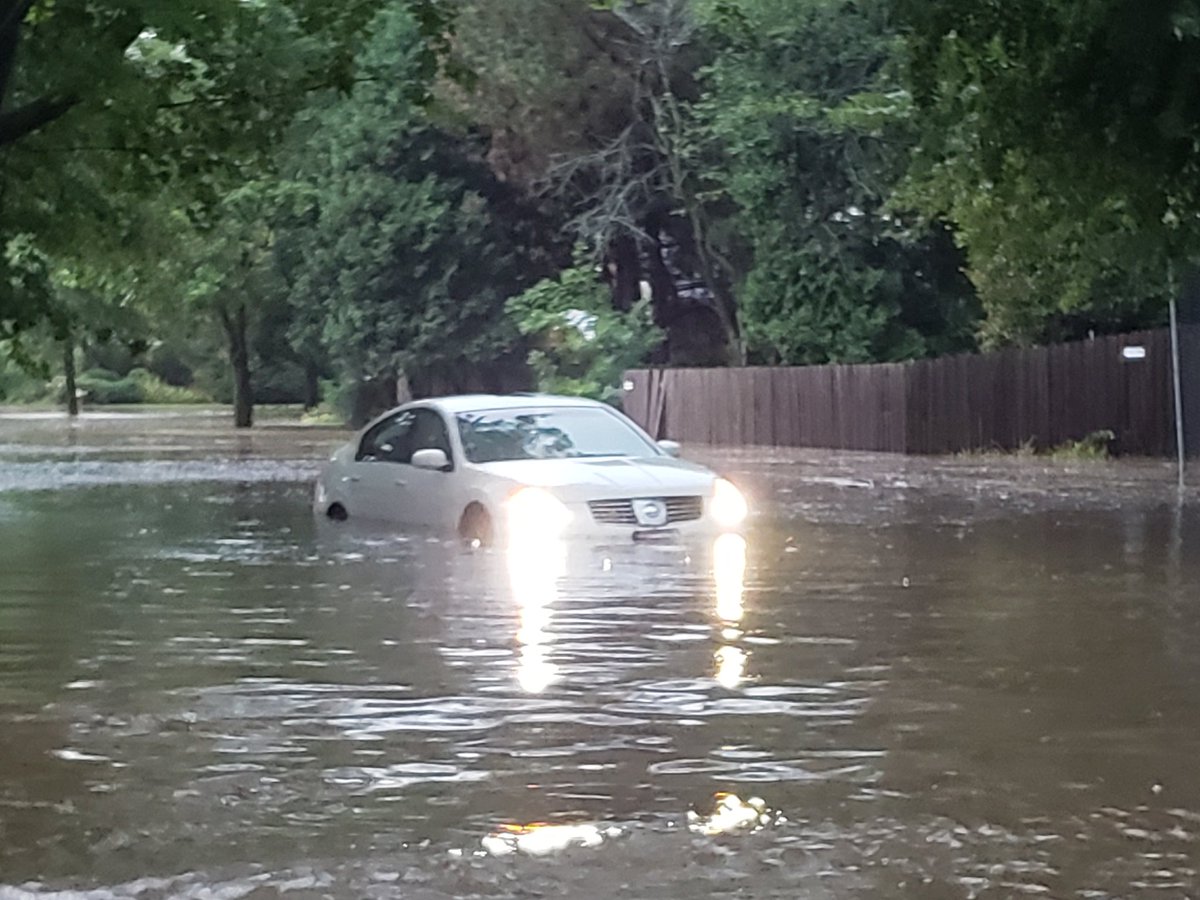
I note that preliminary damage estimates from recent Madison-area flooding top $100 million, with roughly a third tied to public asset losses.

I'd been tracking and posting these events all week, here.

And the probability of more rain and fresh damage only adds to the stresses county-wide, including whether what is clearly a major disaster in southern Wisconsin will meet enough federal criteria to release welcome financial assistance and spur immediate and lasting reconstruction.

If I remember how disaster accounting took place after flooding in Milwaukee when I worked for Mayor John Norquist in the late '90's, the county was in charge of gathering local municipalities' damage assessments, with final federal evaluations and federal aid decisions taking weeks, at a minimum.

What was critical to the release of federal aid was the extent of damage to common facilities, like roads, bridges or other public infrastructure or material, with the possibility that assistance might be provided, but not necessarily aimed at individual homeowners or businesses. 

I read FEMA's standards and rules here; basically, the feds assess the damage estimates which they receive from state and local officials and may make a range of declarations which can release various levels of assistance. Or FEMA can decide that recovery is within the ability of state, municipal and individual claimants to absorb. 

There's no magic dollar threshold that releases federal aid, and there is the possibility of a federal finding that will be disappointing to some; for example, individual property owners who find themselves eligible for low-interest federal loans may lack the ability to take on more debt. 

So critical factors are the various forms of insurance or aptly-named 'rainy day' resources at hand, and the bottom-line damage estimates passed up the chain of command to FEMA, particularly with regard to public property - - roads, bridges, etc. - - because those are commonly-purchased assets and their sudden loss has widespread consequence the wider and longer their reach.

I repeat again that this is the time when public service work is so obviously crucial, as it is when the floodlights are not brightly lit.

Final thought.

Federal disaster declarations and the release of dollars are not supposed to be political processes. All the preparatory work at FEMA will be done by civil servants, and some perhaps by consultants, but ultimately, the final determinations are made by political appointees.

It would obviously help if there were good relationships among the state and federal officials most-intimately involved, but to me it is not clear what baseline political messages Walker and Trump care to highlight right now on issues like the role of government, the sufficiency of state resources, let alone the engagement of Trump's White House and its priorities.

The best way I think to sum up the road ahead is that it should not be political, anything can be. 

Monday, October 29, 2012

Repent, Ye East Coast Sinners

Mitt Romney, replying to a 2011 debate question about federal borrowing for FEMA disaster spending after the Joplin tornado, called more borrowing "immoral."

House Republicans have cut such spending, and the Ryan budget, which Romney endorsed, calls for cuts to FEMA.

The debate, on CNN, was moderated by John King:

KING: Governor Romney? You’ve been a chief executive of a state. I was just in Joplin, Missouri. I’ve been in Mississippi and Louisiana and Tennessee and other communities dealing with whether it’s the tornadoes, the flooding, and worse. FEMA is about to run out of money, and there are some people who say do it on a case-by-case basis and some people who say, you know, maybe we’re learning a lesson here that the states should take on more of this role. How do you deal with something like that?
ROMNEY: Absolutely. Every time you have an occasion to take something from the federal government and send it back to the states, that’s the right direction. And if you can go even further and send it back to the private sector, that’s even better.
Instead of thinking in the federal budget, what we should cut — we should ask ourselves the opposite question. What should we keep? We should take all of what we’re doing at the federal level and say, what are the things we’re doing that we don’t have to do? And those things we’ve got to stop doing, because we’re borrowing $1.6 trillion more this year than we’re taking in. We cannot…
KING: Including disaster relief, though?
ROMNEY: We cannot — we cannot afford to do those things without jeopardizing the future for our kids. It is simply immoral, in my view, for us to continue to rack up larger and larger debts and pass them on to our kids, knowing full well that we’ll all be dead and gone before it’s paid off. It makes no sense at all.

Friday, January 22, 2016

Wisconsin's natural disaster planning questioned

The Natural Resources Defense Council sent out this email notice today about states' emergency preparedness, the relationship of such plans to climate change, and federal financing.

Wisconsin - - and note also from the NRDC the rather gloomy prediction of a strong state plan emerging from the Walker administration - - is specifically referenced:

Governments of three states – Maryland, Wisconsin, and Wyoming – and one territory – Puerto Rico – are currently drafting plans to help keep citizens, property and infrastructure as safe as possible the next time a natural disaster (blizzard, anyone?) strikes. These plans are important.
They help the Federal Emergency Management Agency (FEMA) identify how to best allocate millions of dollars in pre-disaster mitigation funding. And for the first time ever, the four plans scheduled to be submitted to FEMA in 2016 must include expected impacts from climate change.
As plans are being drafted, we encourage you to check in on their progress. What will Maryland say about blizzards? How will flooding affect Wisconsin? Is Wyoming properly accounting for climate change? What about sea-level rise Puerto Rico?
I've noted several times on this blog that Wisconsin these days shows little official interest in climate change. Here is one recent summary posting:
Gov. Walker's corporate-friendly Department of Natural Resources has scrubbed virtually every link and word about climate change from what had been a very useful and comprehensive web page - - noted often on this blog back to 2012 - - and the agency is poised to undergo another round of budget and personnel cuts aimed by Walker at scientific research, policy-making and field work. 
Wisconsin's forests and the wetlands and waters they protect are vulnerable to a changing climate's drought, rising temperatures and disruptive, heavier rain events: the state's agricultural and tourism sectors can prosper only with the best science available - - regrettably not a current administration priority. 
Walker's DNR is giving but a cursory official look at a cross-state tar sand oil pipeline from the Canadian north that will enable the shipment of far more tar sand oil daily than is envisioned for the higher-profile Keystone XL - - a look being managed without a comprehensive environmental review of the route
Walker is also coordinating opposition by his Public Service Commission and the Attorney General to new clean air greenhouse emission rules proposed by the US Environmental Protection Agency, and Walker signed a public pledge sought by the Koch brothers opposing governmental actions against climate change.

Tuesday, August 28, 2012

GOP Has Forced Cuts To FEMA, Corps Of Engineers Funding

The rain-delayed GOP convention in Tampa is certainly under a cloud.

The New York Times reminds us that Tea Partyish Republicans in Congress have forced cuts in FEMA and US Army Corps of Engineer funding - - the very disaster relief programs that will help rebuild the Gulf states when Hurricane Isaac blows itself out and that may help save New Orleans from another Hurricane Katrina-style catastrophe:

Between 2010 and 2012, House Republicans forced a reduction of 43 percent in the primary grants from the Federal Emergency Management Agency that pay for disaster preparedness. That is $1.8 billion that will not be available for evacuation equipment and supplies, communications gear that lets first responders speak to one another, and training exercises...

That spending was enormously useful during last year’s tornadoes in Joplin, Mo., and Tuscaloosa, Ala. Although the effects of the cuts will not be felt yet as gulf states deal with this week’s storm, they will leave the region less prepared for future hurricanes, tornadoes and floods. 

The New Orleans area, in particular, will rely this week on $14 billion in levee construction, pumps and other flood control structures built by the Army Corps of Engineers since Katrina. But the corps’s construction budget has been cut by 21 percent since 2009 because of Republican pressure, hitting flood prevention especially hard. 

Wednesday, August 29, 2012

A Reminder: GOP Cut FEMA, Corps Of Engineer Funding

Isaac accountability check:

The New York Times reminds us that Tea Partyish Republicans in Congress have forced cuts in FEMA and US Army Corps of Engineer funding - - the very disaster relief programs that will help rebuild the Gulf states when Hurricane Isaac blows itself out and that may help save New Orleans from another Hurricane Katrina-style catastrophe:

Wednesday, October 31, 2007

Remember - - The Bush Administration Chooses These People For Leadership

The administration could have picked anyone in the country for key positions, and intentionally chose people like Attorney General Alberto Gonzalez, or Michael Brown to run FEMA, or various insider lobbyists to manage regulatory agencies.

It wasn't that long ago that US climate change policy, with a noticeable tilt towards Big Oil and away from renewables, was line-edited by a former Exxon lobbyist, Philip Cooney.

But the recent outrage over John Tanner's supervision of the Justice Department's Voting Rights section takes the cake.

Tanner is the guy who recently said that obstructions. such as voter ID requirements, faced by elderly white voters was a more serious problem than it was for elderly minority voters because whites tended to live longer and minorities died earlier.

Don't believe that a Justice Department official could hold that sort of view, and verbalize it?

Here is the Washington Post story.

Monday, October 29, 2012

Anybody, Post-Sandy, For Smaller Government Today? Out East?

Why have anti-government/small-government/public employee-bashing conservatives gone so silent today?

How does the Tea Party-obeisant and FEMA-opponent Mitt Romney, with ideological sidekick and shiny object Paul Ryan in tow, even dare show that campaign's face between now and Nov. 6th?

Tuesday, August 28, 2012

When Small Government Conservatives Want Big Government

It takes a hurricane to make small government conservatives into big government devotees.

[Image of probabilities of tropical storm force winds]

National hurricane center forecasters and airborne storm chasers were working overtime to plot Hurricane Isaac's course, and FEMA began to position relief assets in the region.


When Tea Party Republican Florida Governor Rick Scott told southern county residents to evacuate, they did so on Interstate highways built mostly with federal funding.

As Isaac turned west towards Louisiana, small government Tea Party Republican cheerleader Gov. Bobby Jindal complained to President Barack Obama that the feds shorted his state in emergency planning money.

And when the storm passes, it will be the federal government - - spending tax money - - that leads the cleanup and reconstruction.

As it should.

Pity that Republican governors along the Gulf Coast and GOP obstructionist tightwads in the House of Representatives do not understand that the plight of the long-term unemployed, or drought-ravaged farmers - - fellow Americans trying to return to productivity - - is no less desperate.

Monday, December 17, 2007

With Checkered History of Reassurance, Bush Reassures On The Economy

When the guy who told us "Mission Accomplished," and "the end of major combat," and FEMA's boss was doing "a heckuva job" now says the economy is going to be OK, I get worried.

Especially when he delivers this important talk at the Yak-A-Doo restaurant in a hotel in Fredericksburg, MD.

I was raised in Maryland, and I've been to Fredericksburg, and though I cannot claim to have eaten at the Yak-A-Doo, I'm afraid it won't lend much credibility to the story, let alone to Pres. Bush's image as The Prognosticator.

Saturday, September 18, 2010

FEMA Aid For Milwaukee-Area Flood Victims Welcome News

I guess it does help to have a strong federal government after all.

Sunday, October 28, 2012

Climate Change Disappeared From Campaigns, Returns To East Coast Tomorrow

Neither presidential campaign or the news media wanted to touch climate change in the debates or along with serious discussions of serious issues like Medicare, or taxes, so here comes yet another major weather event - - a late-year hurricane/super-storm ready to collide with winter air over the eastern third of the US in this year and decade of profound and damaging climate occurrences - - and all opportunity for context and policy advancement is lost.

[Though Ryan and Romney backed cuts to FEMA and flood-control budgets.]

The language accompanying the storm's warnings is similar to what was issued just before Katrina hit. Even with Katrina's last-minute downgrade, the impact was catastrophic.

I'm not saying that human behavior and fossil fuel burn caused this storm, but it's the height of denial to say that our climate isn't reflecting the new, post-industrial 'normal' long-predicted: heavier rain events, extreme weather outbreaks and growing danger to low-lying, coastal areas that will take lives and greatly add to public budgets and emergency spending.

Anyone want to guess at how long it will take to restore electrical power, finish the cleanup, add up the damage and pay off the claims this time?

Because of a monster hurricane. It's nearly November?

The oceans, air temperatures and precipitation are all intricately interwoven; you can call a decade of record warmth and repeated big storms, floods and harsh fire 'seasons' a mere coincidence, but it would have been better, and still would be useful to treat them as real and addressable circumstances.

I don't give President Obama an "A" on these matters, but I think we can say that if Mitt Romney's anti- EPA/free market worship philosophy gets free rein in The White House, and if the Koch brothers are over for dinner, you can expect lower grades.

Cross-posted at Purple Wisconsin.

Thursday, February 6, 2014

How Some Of Wisconsin's Surplus (Or More Regular Dollars) Should Be Invested

There are plenty of potholes on roads statewide right now that are sinkholes-in-waiting, and you don't have to be a road engineer to know that when all this snow and ice finally melt some potholes will need their own DNR environmental impact statements.

The American Society of Civil Engineers has listed the infrastructure in Wisconsin that needs fixing

These caught my eye:

Driving on roads in need of repair costs Wisconsin motorists $1.147 billion a year in extra vehicle repairs and operating costs – $281 per motorist.
71% of Wisconsin’s roads are in poor or mediocre condition.

  • 1,157 of the 14,057 bridges in Wisconsin (8.2%) are considered structurally deficient. 

  • 779 of the 14,057 bridges in Wisconsin (5.5%) are considered functionally obsolete.
  • Keep these numbers in mind as you watch the Governor and Legislature walk away from these needs, and if you see something on the list you think the state should be funding with surplus dollars, call your legislator. Today.

    :

    Wisconsin Key Facts:

    Water and Environment

    DAMS

    • Wisconsin’s dam safety program has 6.25 Full-Time Employees that each oversee an average of 152.5 state regulated dams.
    • Wisconsin has 252 high hazard dams.
    • 70% of the state regulated dams in Wisconsin have an Emergency Action Plan.
    • Wisconsin’s state dam safety program has an annual budget of $752,000.

    DRINKING WATER

    • Wisconsin has reported $6.2 billion in drinking water infrastructure needs over the next 20 years.

    HAZARDOUS WASTE

    • Wisconsin has 38 sites on the National Priorities List.

    LEVEES

    • Wisconsin has approximately 134 miles of levees according to the current FEMA Midterm Levee Inventory.

    WASTEWATER

    • Wisconsin has reported $6.4 billion in wastewater infrastructure needs over the next 20 years.

    Transportation

    AVIATION

    • There are 133 public-use airports in Wisconsin.

    BRIDGES

    • 1,157 of the 14,057 bridges in Wisconsin (8.2%) are considered structurally deficient.
    • 779 of the 14,057 bridges in Wisconsin (5.5%) are considered functionally obsolete.
    • Wisconsin received $18.3 million from the Federal Highway Bridge Fund in FY2011.

    INLAND WATERWAYS

    • Wisconsin has 230 miles of inland waterways, ranking it 29th in the nation.

    PORTS

    • Wisconsin’s ports handled 30.6 million short tons of cargo in 2009, ranking it 22nd in the nation.

    RAIL

    • Wisconsin has 8 freight railroads covering 3,387 miles across the state, ranking it 14th by mileage.

    ROADS

    • Driving on roads in need of repair costs Wisconsin motorists $1.147 billion a year in extra vehicle repairs and operating costs – $281 per motorist.
    • 71% of Wisconsin’s roads are in poor or mediocre condition.
    • Wisconsin has 114,843 public road miles.
    • Wisconsin’s highway vehicle-miles traveled in 2009 was approximately 10,440 per capita, ranking it 22nd in the nation.
    • Wisconsin’s gas tax of 32.9 cents per gallon has not been increased in 6 years.

    TRANSIT

    • Wisconsin has 70,074 annual unlinked passenger trips via transit systems – motor bus, heavy rail, light rail, and commuter rail.

    Public Facilities

    PARKS AND RECREATION

    • Wisconsin has reported an unmet need of $53.2 million for its parks system.

    SCHOOLS

    • Public school districts in Wisconsin spent a total of $1.5 billion on capital outlays for school construction and acquisition of land and existing structures in fiscal years 2005–2008.
    • It is estimated that Wisconsin schools have $4.4 billion in infrastructure funding needs.

    Energy

    • Wisconsin produces 4.586 gigawatt-hours of renewable energy every year, ranking it 27th.

    Monday, April 9, 2012

    Ryan Budget Called "Trash"

    Sounds about right.

    ...because, as you should recall, Ryan’s budget — which is now the House Republican budget — entirely wipes out the federal government in the longer run. By 2050, assuming that military spending holds at current levels (and Ryan and especially Mitt Romney are against any cuts), there won’t be any room remaining within Ryan’s budget for anything other than Social Security and health-care entitlements. Zero. No FBI, no FEMA, no spending on veterans … nothing. Which makes the whole idea of fighting over what would happen in the first 10 years just a sideshow.

    The point is that there’s simply nothing serious about Paul Ryan’s approach to budgeting. We have no way of knowing, from the documents that Ryan presents, whether he really wants to sneak in lots of massively unpopular things (raising middle class taxes by eliminating popular deductions, shutting down programs for veterans), or whether that’s all just for show and the real Ryan budget would explode the deficit. As [Dean] Baker says about the Ryan budget: “[P]eople who believe in arithmetic” will “call it what it is: a piece of trash.”
    Definitely a boost to have all this in the Walker recall campaign!

    Sunday, October 28, 2012

    Ryan And Romney Endorsed Cuts To FEMA

    As superstorm Sandy heads for the East Coast, let's not forget that Ryan and Romney backed budget cuts to emergency disaster responses:

    That is not something you will hear Paul Ryan talk about this week at the convention, nor any of the other lawmakers who make simplistic promises about the power of slashing government spending. But the budgets assembled by Mr. Ryan and warmly embraced by Mitt Romney severely cut spending for emergency preparedness, exactly the kind of money needed in Louisiana, Mississippi, Alabama and scores of other states for this and future storms. 

    Between 2010 and 2012, House Republicans forced a reduction of 43 percent in the primary grants from the Federal Emergency Management Agency that pay for disaster preparedness. That is $1.8 billion that will not be available for evacuation equipment and supplies, communications gear that lets first responders speak to one another, and training exercises.

     (House Republicans tried to cut $354 million more in this year’s homeland security spending bill, but Democrats restored the money in a conference with the Senate.)
    Posted earlier.

    Tuesday, April 15, 2008

    Along With Other Big Issues, Bush Will Leave Climate Change To His Successor

    Pres. George W. Bush is expected to announce some goals for curbing greenhouse emissions - - no plans, mind you - - just some goals - - in a Rose Garden speech Wednesday.

    This is the Bush pattern: screw things up during most of your Presidency, then do a little legacy outreach in the 8th year - - but then take a mountain bike ride, go on vacation and leave the heavy lifting repair work to your successor.

    This is the story of the Bush presidency and the Iraq war, the housing crisis, climate change, the decline of the dollar, FEMA's credibility, unemployment, airline stability, the price of gasoline, the national deficit, the international trade imbalance, the price of food, US military equiping and recruiting, and America's standing in the world.

    Attendance has risen steadily at Major League Ballparks.

    Tuesday, September 26, 2017

    When will Trump Tweet proof he's a two-sport dilettante?

    [Updated] Oh, look - - college hoops, and a scandal!

    How long before Trump shows us via Twitter that he can manipulate that new presidential irrelevancy as a juicy distracting opportunity away from his racist war with black athletes, plus bad poll numbers and Puerto Rico's suffering to prove he's a two-sport dilettante?

    I'll monitor his Twitter feed - - and here's Trump at his 'not many people know that best' - - 


    Trump on difficulty of delivering aid to Puerto Rico: It's in the middle of a "very big ocean"

    where earlier he'd returned to his NFL obsession while basically blaming Puerto Rico for its desperate, post-hurricane situation:
      4 hours ago4 hours agoMore The NFL has all sorts of rules and regulations. The only way out for them is to set a rule that you can't kneel during our National Anthem!
      6 hours ago6 hours agoMore But while Dallas dropped to its knees as a team, they all stood up for our National Anthem. Big progress being made-we all love our country!
    1. ...owed to Wall Street and the banks which, sadly, must be dealt with. Food, water and medical are top priorities - and doing well.
    2. ...It's old electrical grid, which was in terrible shape, was devastated. Much of the Island was destroyed, with billions of dollars....
    3. Texas & Florida are doing great but Puerto Rico, which was already suffering from broken infrastructure & massive debt, is in deep trouble..