Showing posts sorted by relevance for query streetcar. Sort by date Show all posts

Wednesday, October 17, 2018

Streetcar already boosting Milwaukee economy, despite obstructionist hypocrisies

The Milwaukee streetcar project, just weeks from launching regular service, is already spurring business development along its initial corridor.
Downtown Milwaukee office building along streetcar line to be converted to 73 apartments 
And:
Property values increase nearly 28% along the Milwaukee streetcar route, Mayor Barrett says.
That's in spite of right wing schemers who will always prefer a struggling, resource-challenged big city that fits their perverse, inward-looking suburbs'-first narrative even if it contradicts other so-called conservative principles, like local control and economic growth.

More about that, below.


Former Milwaukee Mayor John Norquist had hit right a guest blog post he sent me some weeks ago:
Kansas City, a city with less population density than Milwaukee, recently built a streetcar line which has become quite popular and successful. https://www.nytimes.com/2018/07/04/travel/the-perfect-way-to-explore-modern-kansas-city-a-streetcar-believe-it-or-not.html
I support the Milwaukee Streetcar. It begins the restoration of a system that served Milwaukee’s people and property during the period of the city’s greatest prosperity and growth. 
The HOP MKE Streetcar.jpg
I would also support expansion of passenger train service (the Milwaukee-Mad City High Speed Train was a great idea). I would also support Light Rail (same as streetcar only on its own right of way), electric bus or BRT. They would all add value to Milwaukee unlike the freeways which damaged the city badly and unnecessarily.
And I stand by what I wrote about this in 2014:
Far right's double-standard power play aimed at Milwaukee's streetcar
Before Obamacare, before Amtrak and Benghazi, right-wing radio talkers around here and the elected officials they control had light rail to weaponize - - and now they've got The Streetcar.

Though Milwaukee is continuing to its plan a downtown streetcar and build it with accessible, available local and federal funds, Gov. Walker, out-state legislators and ideological allies linked to the Bradley Foundation are determined to derail it by applying legal, regulatory and financing restrictions not used in other transportation programs statewide.

They want one set of rules covering projects they like, such as highway expansion that keeps road-builder and other lobbies satisfied, but they are manipulating the process to apply more selective rules tag-teamed from the Governor's office to his appointees on the Public Service Commission to define what shall be allowed with their blessing to run on local Milwaukee streets.

The lever they have conjured for this iteration of killing the project and over-turning local control: the cost of moving some utilities' property so trolley tracks and electrical connections can be installed.

The Journal Sentinel puts it this way in a Friday editorial in its support for the streetcar and Mayor Barrett's leadership to build it:
Barrett is right to do what he's doing. Rarely have we seen such a blatant challenge to local control as the Legislature's politically charged bill. Gov. Scott Walker should never have signed it... 
Streetcar opponents in the Legislature passed a measure last year that would bar utility ratepayers from bearing any costs for the streetcar project — even though this is standard procedure for other projects, including many road projects that these same legislators likely would lobby for if the projects were in their own districts. Their bill was all about killing a Milwaukee project.
So why is Team Walker meddling in this one Milwaukee project?

Let's be honest:

The Milwaukee streetcar and Democratic Milwaukee Mayor Tom Barrett, as was former Mayor John Norquist, are being beaten up for political and punitive purposes by conservative, anti-urban interests.

They've been whipped into a perpetual frenzy since the 1990's when right radio fear-mongers discovered that yelling about light rail boosted ratings in the suburbs and drove Republican voters to the polls.

Conservative Republican politicians in Waukesha County and then-Gov. Tommy Thompson continued to block light rail even after Milwaukee officials to whom earmarked federal funds had been assigned agreed that light rail would not touch sovereign Waukesha County soil.

The talkers and their beneficiaries killed Milwaukee light rail - - and are out to do the same for the Milwaukee streetcar even though it would be a boon to the downtown and thus the statewide economy - - as billions of dollars in freeway expansion continue to be spent across the region serving exurban malls and subdivisions with Milwaukee tax and utility ratepayers kicking in mandatory shares.

Here is some 2008 history about how Republicans sand-bagged Milwaukee urban rail a decade earlier, thus part of the reason urban rail for Milwaukee in the form of a streetcar has taken so long to launch.
A starter light rail system was recommended for Milwaukee County in a major state-funded regional transportation study in the 1990s that had considerable public and private sector support. 
But conservative AM talk radio and opposition in Waukesha County blocked further study of light rail for Milwaukee, even though $241 million in federal funds was set aside specifically for transit improvements in Milwaukee County. 
Had plans unfolded on schedule, the starter light rail, with an estimated 21,000 riders on weekdays, would have opened in 2006 and run about 10 miles from the Third Ward to Summerfest, downtown, Miller Park, the Milwaukee County Zoo and the County Grounds.


Friday, January 17, 2014

Far Right's Double Standard Power Play Aimed At Milwaukee Streetcar

Before Obamacare, before Amtrak and Benghazi, right-wing radio talkers around here and the elected officials they control had light rail to weaponize - - and now they've got The Streetcar.

Though Milwaukee is continuing to its plan a downtown streetcar and build it with accessible, available local and federal funds, Gov. Walker, out-state legislators and ideological allies linked to the Bradley Foundation are determined to derail it by applying legal, regulatory and financing restrictions not used in other transportation programs statewide.

They want one set of rules covering projects they like, such as highway expansion that keeps road-builder and other lobbies satisfied, but they are manipulating the process to apply more selective rules tag-teamed from the Governor's office to his appointees on the Public Service Commission to define what shall be allowed with their blessing to run on local Milwaukee streets.

The lever they have conjured for this iteration of killing the project and over-turning local control: the cost of moving some utilities' property so trolley tracks and electrical connections can be installed.

The Journal Sentinel puts it this way in a Friday editorial in its support for the streetcar and Mayor Barrett's leadership to build it:

Barrett is right to do what he's doing. Rarely have we seen such a blatant challenge to local control as the Legislature's politically charged bill. Gov. Scott Walker should never have signed it... 
Streetcar opponents in the Legislature passed a measure last year that would bar utility ratepayers from bearing any costs for the streetcar project — even though this is standard procedure for other projects, including many road projects that these same legislators likely would lobby for if the projects were in their own districts. Their bill was all about killing a Milwaukee project.

So why is Team Walker meddling in this one Milwaukee project?

Let's be honest:

The Milwaukee streetcar and Democratic Milwaukee Mayor Tom Barrett, as was former Mayor John Norquist, are being beaten up for political and punitive purposes by conservative, anti-urban interests.

They've been whipped into a perpetual frenzy since the 1990's when right radio fear-mongers discovered that yelling about light rail boosted ratings in the suburbs and drove Republican voters to the polls.

Conservative Republican politicians in Waukesha County and then-Gov. Tommy Thompson continued to block light rail even after Milwaukee officials to whom earmarked federal funds had been assigned agreed that light rail would not touch sovereign Waukesha County soil.

The talkers and their beneficiaries killed Milwaukee light rail - - and are out to do the same for the Milwaukee streetcar even though it would be a boon to the downtown and thus statewide economy - - as billions of dollars in freeway expansion continue to be spent across the region serving exurban malls and subdivisions with Milwaukee tax and utility ratepayers kicking in mandatory shares.

Some history here.


Sunday, December 18, 2016

Despite GOP blockade, streetcar-related development heading for Milwaukee

[Updated] Great to see all the job-producing development ticketed for downtown Milwaukee - - nearly two dozen projects, I understand - - and like the new Bucks arena, and The Couture complex, this proposed Marcus Corp. multi-purpose convention center adjunct is tied to the streetcar system which is under construction.

The Milwaukee Business Journal's story about competing proposals for the new, mixed use development near the convention center mentioned the streetcar connections:

Plans from the hotel division of Milwaukee-based Marcus Corp. (NYSE: MCS) include a 276-room expansion of the Hilton Milwaukee City Center, 509 W. Wisconsin Ave., an additional 61,500 square feet of new meeting and exhibit space, a hub for the new downtown streetcar, retail, food and beverage outlets, and a 200-unit high-rise apartment tower. The Marcus proposal, which had been one of two proposals submitted for the site, is being called “eMbarKE...” 
Marcus’ plans are being made public 80 days after the Milwaukee Business Journal broke the news of the $279 million public-private “Nexus” project proposal for Fourth and Wisconsin, that includes three hotels with more than 506 rooms, a hub for the Milwaukee streetcar, more than 100,000 square feet of convention space, and 22,000 square feet of street level restaurants, bars and cafés.
The city rail program survived opposition by Scott Walker, rightwing talk radio, and anti-Milwaukee politicking by Republicans across the board - - from ex-legislator-turned-lobbyist Scott Jensen to former Waukesha County Executive Dan Finley and the County Board there - - even after the initial plan dropped Waukesha County from any rail contact.

And don't forget the negative role played by ex-Gov. Tommy Thompson who had been an initial supporter and had his transportation department help with the planning.


But Thompson flushed away a big part of his moderate legacy and often-city-friendly agenda by turning his back first on his own Milwaukee urban rail concept that was part of a freeway expansion, and, later, opposing using federal funds for an Amtrak extension to Madison from Milwaukee for the shallowest of political reasons - - aligning himself with Walker's partisan, Milwaukee-hating hostility to rail.


Fair to say that these Republicans, having killed light rail for purely ideological and electioneering reasons, and who also played the same 'stick-it-to-Milwaukee' game by delaying the streetcar for years, cost Milwaukee and Wisconsin thousands of jobs and countess millions of dollars in rail-related development.


Nonetheless, the streetcar launch is not that far away - - 2018, officials say - - and city residents, merchants, shoppers, tourists and developers will be winners.


Note the advantages of just the initial route:

The route was identified to serve the greatest numbers of riders along a route that also provides significant opportunities for economic development.  It was designed to complement existing bus routes, especially the major bus corridor along Wisconsin Avenue.   It connects the Intermodal Station and its 1.4 million annual users; the Third Ward (the fastest-growing neighborhood in City); East Town (with the largest concentration of jobs in the state); and the lower east side (the highest-density residential neighborhood in state).  The initial route and extensions would be within a quarter-mile* of the following destinations: 
  • 100% hotels
  • 90% occupied office
  • 90% occupied retail
  • 77% of parking
  • 77% of housing
  • 90% of major downtown attractions
  • 100% of downtown’s 20 largest employers
Banned in Milwaukee
Twin Cities street car, above. Milwaukee's will use next generation, sleeker equipment.

Tuesday, July 12, 2011

Tell Key Milwaukee Aldermen You Want The Milwaukee Streetcar

Modern downtown development needs the long-delayed streetcar system to move forward.

Common Council Ald. Michael Murphy, the Finance Committee chair, and Council President Willie Hines - - whines@milwaukee.gov and mmurph@milwaukee.gov - - need to hear from you:

And from the project's website, more below:

The future of Milwaukee’s transportation system is taking shape, and it includes The Milwaukee Streetcar network that provides a modern way for people to connect with their jobs, their homes, and their entertainment destinations.

Streetcars do more than simply improve mobility. By promoting development, raising property values, attracting businesses,
and helping to define our contemporary city, Streetcars benefit everyone. Streetcars add vitality to an urban setting, increasing commerce and activity around every one of the fixed stations and stops.

An accessible and convenient Streetcar provides connections to our array of transportation choices. Pedestrians, bus riders, train travelers, automobile drivers, and bicyclists can choose the Streetcar as a link to their destinations.

Visitors will see Milwaukee as an even more attractive city when they use the Streetcar. The routes will be easy to navigate, downtown destinations will be convenient to reach, and riders will appreciate the high-quality ride that new Streetcars deliver.

Streetcars are quiet, clean, and efficient. Their popularity and value have been demonstrated in other cities. Streetcars create new opportunities and generate activity in the cities they serve.

For additional background information on the Alternatives Analysis that resulted in The Milwaukee Streetcar Locally Preferred Alternative (LPA), please visit www.milwaukeeconnector.com.

Monday, April 21, 2014

Amtrak, Streetcar Benefits Denied To WI, Affirmed Elsewhere

Conservatives would have you believe that passenger rail doesn't help the economy, but if that were true, why would leading buyers of train equipment on both coasts - - the State of California and Amtrak, headquartered in Washington, D.C. - - make the documentation of job-creation a required part of the bidding process?
In the RFP, bidders are asked to submit information identifying U.S. production sites; a description of jobs that could be created for both skilled and unskilled workers; total compensation and benefit types that would be provided; workforce training plans; outreach and recruitment plans for new hires; the manufacturers’ experience in successfully implementing employment strategies; and information on how the employment plan would cascade to subcontractors and component suppliers.
The bidding requirement underscores a simple truth that Wisconsin talk radio hosts and the right-wing politicians who kneel before them alternately deny, mock and miscommunicate in a political game they manipulate for their own needs - - votes and rating points - - at the expense of the workforce and economic development along the Amtrak, commuter rail and municipal streetcar lines they continue to block.
That simple truth:
Passenger rail creates jobs.
Former Milwaukee Journal Sentinel transportation reporter Larry Sandler in early 2012 had laid out the train-assembling, rail construction and spin-off jobs lost when GOP gubernatorial-candidate-and-later-Governor Scott Walker effectively scuttled the Milwaukee-Madison Amtrak extension that was also projected as a link in a multi-state, higher-speed passenger service upgrade:
Talgo, a Spanish train manufacturer, is seeking a Wisconsin plant to assemble trains that could run on this route. The Talgo business could create 50 to 60 jobs building two trains that the state already has ordered for the existing Milwaukee-to-Chicago Hiawatha service, plus another 20 to 30 more building two more trains for high-speed service, says Jim Schmelzer, president of Super Steel Products Corp., which is seeking the work.
Counting "indirect" jobs at suppliers would add another 152 jobs this year, 479 next year, 647 in 2012, 202 in 2013, 54 in 2014 and 11 in 2015. State and local government jobs, including planners, engineers and project managers, would total 67 this year, 212 next year, 291 in 2012, 109 in 2013, 47 in 2014 and 26 in 2015. Klein said personnel hired by the state Department of Transportation for this project would hold their jobs no more than four years.
Therefore, total employment specifically linked to the train line would be 1,100 this year, 3,483 next year, 4,732 in 2012, 1,542 in 2013, 483 in 2014 and 167 in 2015.
Here is a documented summary and timeline of the loss of the Amtrak jobs in Wisconsin.
And about the Milwaukee streetcar the Walkerites continue to block, here's another truth that the talkers and their ideological political allies deny and twist
Streetcar systems also create jobs and development, principally in the downtowns they heavily serve.
Consider these numbers about just one city cited in a posting about several municipalities' streetcar projects nationwide - - numbers that are lost on Walker, his anti-rail team, and to the detriment of Wisconsin businesses, workers, students, city-dwellers and tourists, too:
When it opens for revenue service this summer, [Tuscon's streetcar] Sun Link will connect the University of Arizona, University of Arizona Medical Center, the 4th Avenue and Main Gate business districts, downtown Tucson and the city's Westside redevelopment district. City officials estimate about 100,000 people live and work within a half mile of the streetcar route.
And since 2010, the planned system has helped attract student housing, retail shops, restaurants and entertainment-focused businesses. City officials believe Sun Link will help promote Tucson as "a hub of business, retail, the arts, technology, education and innovation," according to the Sun Link website....
The Tucson Downtown Partnership has estimated more than $800 million of public and private investment has occurred along the future Sun Link line since the project was approved.  

Sunday, August 19, 2018

Guest post: John Norquist says streetcars belong in Milwaukee

In 1945, at the end of WW II, Milwaukee had 350 miles of streetcar lines and 198 miles of interurban electric trains that served Burlington, East Troy, Waukesha and Sheboygan. In addition passenger trains connected to Madison, Green Bay, Chicago and beyond. There were over 80 round trips to Chicago provided by the Milwaukee Road, the Northwestern RR and the electric North Shore Line. In addition there were 110 miles of electric bus lines run by the Milwaukee Transit Lines. All of this service was privately-owned and paid substantial state and local taxes. 

In the post-war era, the US government spent huge sums on road building and zero on transit and trains. The State of Wisconsin likewise concentrated dollars on road building. By 1956 the Feds contributed 90% to the Interstate highways while states contributed 10%. Cities need not pay anything. 

In the rest of the developed world, moneys were spent in a more balanced way on transit, trains and roads. In the US. government transportation dollars were spent almost exclusively on highways. In America, between subsidies to road building and taxes paid by transit and passenger railroads. the incentive was to shut down transit and train facilities. 

In Milwaukee all streetcars, interurbans and electric buses were gone by 1964. 

By the mid-1970s, the main north-south and east-west freeways were built. I-94 from Marquette to 100th Street was built over the Interurban right of way that once connected the western suburbs with downtown. 

The freeways had huge impacts on land use. Retail spread away from the city. Downtown, which had been the #1 retail district in the state fell out of the top 10 by 1980. North 3rd Street (now King Drive) had been #2 and by 1980 was not even in the top 40. While not the only factor, removing quality transit and installing high speed highways did not add value to Milwaukee.

By contrast, most West European cities and some in Canada (Vancouver and Winnipeg) have no freeways inside their city boundaries and have thriving neighborhoods and downtowns. 

More people are coming to realize that big roads disrupt the complex economic and social structure of cities while transit adds value. Freeway removals are becoming more common. Paris, France had only one freeway segment which was removed last year. Seoul, South Korea has removed 13 segments of freeway in the last 10 years. Seoul has a vast rail transit network and one of the strongest economies in Asia.

Later the Federal government did start putting relatively small amounts into transit while still allocating most of its transportation money for big road projects. Now, because the Congress failed to raise the gas tax, Federal revenue covers only a small portion of road costs and an even smaller proportion of transit. Now states and particularly cities are increasingly on their own. Hence when spending what money they have, they should spend it on infrastructure that adds value. 

For large and medium size cities that means maintaining street grids and sidewalks, expanding transit and facilitating biking. Cities like Portland, Dallas, Charlotte, Atlanta, Seattle, Salt Lake City and dozens of others have built rail transit lines. No city that has streetcars or other rail facilities are contemplating removing them. 

Kansas City, a city with less population density than Milwaukee, recently built a streetcar line which has become quite popular and successful. https://www.nytimes.com/2018/07/04/travel/the-perfect-way-to-explore-modern-kansas-city-a-streetcar-believe-it-or-not.html

I support the Milwaukee Streetcar. It begins the restoration of a system that served Milwaukee’s people and property during the period of the city’s greatest prosperity and growth. 
The HOP MKE Streetcar.jpg
I would also support expansion of passenger train service (the Milwaukee-Mad City High Speed Train was a great idea). I would also support Light Rail (same as streetcar only on its own right of way), electric bus or BRT. They would all add value to Milwaukee unlike the freeways which damaged the city badly and unnecessarily.

If the billions of dollars spent expanding the Marquette and Zoo interchanges had been spent on transit, Milwaukee would be much more likely to have added tax revenue to support and expand city services.
John Norquist 2008.jpg

                                                  #####

John O. Norquist was Mayor of Milwaukee from 1988 to 2004. I worked for him as Deputy Director of the Department of Administration, and Mayoral Policy Director and Chief of Staff. He also served as President and CEO of the Chicago-based Congress for the New Urbanism.

Sunday, February 3, 2013

Progress On Streetcars in Cincinnati And Milwaukee

Seems that Cincinnati has resolved some utility and costs issues:

City & Duke Energy Reach Streetcar Agreement

Duke Energy To Begin Moving Its Utilities

Today, Mayor Mark Mallory and City Manager Milton Dohoney, Jr. announced that the City of Cincinnati and Duke Energy have reached an agreement on the Streetcar project. Under the agreement, Duke Energy will begin moving its utilities now, while a court determines responsibility for the relocation costs later.
The City and Duke have also agreed to an operations plan for how Duke and the City will work in partnership once the Streetcar is operational.
And Milwaukee is making some progress, though right now it looks like Cincinnati will get there first:
The city plans to release the proposed route of the Milwaukee streetcar project by late spring or early summer, and hopes to begin construction of the streetcar guideway in spring 2014.

The schedule was included in a filing with the state's Public Service Commission. The PSC has not yet ruled on whether the city or utilities must pay for moving utility lines out of the way of the streetcar route, a cost utilities have estimated at more than $55 million.

Tuesday, December 16, 2014

Milwaukee streetcar approval delayed

The Milwaukee Common Council, with opponents using a one-time parliamentary maneuver, delayed for a month consideration of the long-stalled Milwaukee streetcar approval.

Embedded image permalink

The handful of opponents include Council conservatives, like Ald. and mayoral candidate Bob Donovan, and, inexplicably, near southside and Bayview Ald. Tony Zielinski, whose constituents are transit-oriented.

In fact, Zielinski's newsletter praises the development and transit connections for a functional and artistic bus stop he promoted in his district at an intersection where there is a growing concentration of restaurants, shops and other popular, pedestrian-friendly businesses near apartments and other residences:
At the intersections of S. Kinnickinnic, S. Howell and E. Lincoln Avenues, the ArtStop is the product of a unique partnership between the City of Milwaukee, Milwaukee County and Business Improvement District #44. 
With its unique artistic design, the ArtStop shelter will strengthen the already distinctive and bustling business district, and it will also be a significant aesthetic improvement over a somewhat dilapidated bus shelter that has been at the location for years.
Alderman Tony Zielinski said that he felt the triangle at the three-way intersection needed a functional public art bus shelter, which has been dubbed the ArtStop, to maximize the economic and aesthetic potential of that business district.
Exactly as streetcar stops would work along the route.

The streetcar line would be built using available federal transportation project funds and revenue from a routine financing mechanism called Tax Incremental Financing, (TIF), which uses a portion of property taxes from new developments planned along the streetcar route.

It is possible that Republicans in the legislature that are tied to the road-builders' lobby, who like to use Milwaukee as a partisan punching bag and no longer give even lip service to "local control" might use their one-party, state power authority and amend state law just to bar TIF contributions to transportation projects - - though TIF gives municipalities wide latitude to spur development - - and kill the streetcar plan.

For example, TIF was used to insert $24 million into the exurban development at Pabst Farms in Western Waukesha County so that streets and other transportation-related services could be added to the residential and commercial projects being built on converted farmland.

Similarly, Brookfield is getting ready to convert another farm into a retail development and use public financing to lure an upscale development to the project - - much as the Milwaukee TIF could nail down important development from the downtown to the lakefront - -  so the double-standards that have kept Milwaukee land-locked and economically-stunted continue.

Saturday, November 13, 2010

Cincinnati Embracing Rail

Another Midwest success story:


Dear Friend:
I wanted to let you in on some exciting news: a Streetcar visiting Cincinnati.  It is going to be set up on Fountain Square on 5th Street and you will be able to climb aboard and check it out.  It arrives tomorrow and will be here through Wednesday, November 10 and will be open for people to tour from 1:00 pm to 7:00 pm tomorrow and from 11:00 am to 7:00 pm daily after that.
This is a great opportunity for you and your friends to climb aboard and see a modern Streetcar up close.  This isn’t necessarily the Streetcar that we will have in Cincinnati because we haven’t selected our model yet, but it will give you a great idea of what you can expect when our Streetcar system is up and running in 2013.
I invite you to join me tomorrow at 1:00 pm for the opening so that you can be among the first to tour the Streetcar. 
The Streetcar is an exciting project for Cincinnati.  I hope that you get a chance to come to Fountain Square and check it out while it is here, and bring your friends and family when you do. 
Thanks.
Mark Mallory
Mayor


Wednesday, June 13, 2012

National Discussion Of Walker And Milwaukee's Rail Future

In this piece, former Milwaukee Mayor John Norquist reminds people that money ticketed for Milwaukee's streetcar plan originated in a federal grant and was eventually dedicated to Milwaukee transportation projects under a civil rights complaint settlement to which the state agreed.

Norquist is right about that; I was in Milwaukee City Hall as the settlement took shape, and it appears that even Walker knows he shouldn't mess with it"

That deal prohibits the state from blocking the streetcar project, according to a top federal transportation official and an attorney involved in the settlement.

Faced with allegations that it was discriminating against urban minorities by favoring freeways over light rail, the state agreed in November 2000 to cooperate with the Milwaukee Connector study and to incorporate its recommendations into the state's long-term transportation plans. That study eventually spawned the streetcar.

"You don't put something in a plan and then kill it," said Milwaukee Ald. Bob Bauman, one of the attorneys involved in the settlement. "They (state officials) agreed not to interfere."
Federal Transit Administration chief Peter Rogoff agreed, writing in an email: "Under the 2000 settlement, the use of the streetcar funds remains a local decision."

Walker spokesman Cullen Werwie confirmed the governor was aware of the settlement. He referred further questions to the state Department of Transportation.

Transportation Department spokeswoman Peg Schmitt said the settlement was fulfilled when the federal government designated money for the streetcar in 2009. But she added that her agency "will continue to cooperate and provide technical assistance to local officials as they work to implement it."

Tuesday, January 20, 2015

Urban Milwaukee tracks Koch-funded effort to derail streetcar

Last week I wrote I'd been hearing about right-wing advocacy money coming into Milwaukee against the streetcar:
Big numbers are being rumored as streetcar opponents use the project to attack Mayor Barrett.
Props to Bruce Murphy and the Urban Milwaukee blog for fleshing out the details:

------------------------------------------------------------------------
MURPHY’S LAW 
Koch-Funded Group Backs Anti-Streetcar Drive 
Americans for Prosperity has provided paid staff for petition drive, its state director says
 ----------------------------------------------------
Let's hope this convinces some Common Council members said to be on the fence to stand up for the city and modern transit, and stand against this self-interested, right-wing incursion into the city's affairs by fossil fuel barons.

The vote at Wednesday's meeting should be 15-0 in favor of the streetcar. And the city.

Banned in Milwaukee

Monday, December 5, 2011

Anti-Milwaukee Streetcar Forces Hold Good Cards - - Three Of A Kind

There has been reporting in the Journal Sentinel and elsewhere about a petition to the Wisconsin Public Service Commission by a well-connected conservative citizen that seeks to determine who would pay for the cost of moving utility lines if Milwaukee streetcar lines are constructed.

The petitioner hopes the PSC will order that those costs be borne by City of Milwaukee taxpayers only.

Sounds wonky, and perhaps cut-and-dried, but it's a new round in a fight over Milwaukee rail transit dating back to the 1990's, and the issue doesn't usually make it to the Public Service Commission docket.

The petitioner seeking the ruling is Brett Healy, as an individual.
 
Healy is also President of the conservative MacIver Institute, and he's being represented by a relatively new legal institute that receives funding from the conservative Bradley Foundation, so it's pretty clear this is another effort by ideologues on the right to derail urban trains, and the Milwaukee streetcar plan in particular.

As a MacIver Institute posting says:

Healy...has requested a declaratory judgment that the City of Milwaukee will be responsible for paying for the costs associated with moving utility facilities underneath the proposed Milwaukee Streetcar route. Healy is represented in the matter by Richard M. Esenberg and Thomas C. Kamenick of the Wisconsin Institute for Law & Liberty.
Healy's name is going to ring a bell with Gov. Walker's new commissioners' majority at the PSC.

*  One of the new commissioners on the PSC is Attorney Ellen Nowak who worked at the State Capitol for Republicans and served as former GOP Assembly Speaker Scott Jensen's legal counsel.

Healy also worked for Jensen, including as chief of staff - -  and the Town of Brookfield legislator was a long-time opponent of Milwaukee light rail planning. Jensen inserted language in the state budget that forbade any spending on light rail outside of Kenosha County or Dane County - - a policy aimed at blocking movement on rail inside the City and County of Milwaukee.

The restrictions sponsored by Jensen ran parallel with Marquette Interchange planning  - - showing, again, the routine preference for public spending on highways (without beating path to the PSC over utility costs), while hurdles both old and new have obstructed urban rail in Milwaukee.

The earlier light rail plan backed by the City of Milwaukee, and fought by Jensen, was eventually dropped.

"Light rail is dead," Jensen famously declared, and now people formerly around him can take their shot again at the streetcar incarnation 15 years later.  

Note also that Walker killed a federally-funded $800 million Amtrak extension to Madison from Milwaukee, and derailed this key segment of Pres. Obama's Midwest high-speed rail system.

Walker is still committed to smaller Amtrak improvements to the south-bound Milwaukee-Chicago Amtrak service.

This is because Milwaukee business leaders know that lawyers, commodities traders and other Milwaukee-area Republican or upper-income regional residents often use that line, so Walker is serving his corporate, convenience-minded allies by budgeting some money for these improvements - - even though the federal Amtrak funds he forfeited would have covered the costs.

And when various utility lines, poles, towers, transformers and stations need to be moved for a stretch of I-94 past the stadium and Story Hill to link up with the fast-tracked Zoo Interchange serving Waukesha, Menomonee Falls and the south suburbs, among six new big highway projects in the pipeline under Walker statewide, don't look for MacIver, Jensen & Friends to petition the PSC to bill local property taxpayers for the utility work.

That double-standard is only for city rail.

* Oh - - the other half of Walker's new, working 2-1 majority on the PSC is Phil Montgomery, a former, six-term GOP state representative from the Green Bay area who served in the Assembly's Republican caucus along with Jensen.

The state slogan used to be "Wisconsin: You're Among Friends."

Looks like that's back on track.


Wednesday, May 2, 2018

Milwaukee streetcars spurring growth that anti-rail right kept killing

Milwaukee's long-sidetracked streetcars are already boosting development.

Great to see this piece by Jeramey Jannene at Urban Milwaukee about a major apartment complex planned along the budding Milwaukee streetcar route downtown. 
An almost entirely vacant office building along the route of The Hop, Milwaukee’s soon-to-launch streetcar system, is likely to get new life as apartments. 
Chicago-based developer Paul Dincin is proposing to redevelop the Underwriters Exchange Building at 828 N. Broadway into apartments with first-floor commercial space.
The HOP MKE Streetcar.jpg
Long blocked by anti-urban politicians, Milwaukee's streetcars are being delivered and tested.
Jannene has been bird-dogging the streetcar's long, winding route through the political landscape for years, as I noted in 2015, here:
The Milwaukee Common Council voted 9-6 today to approve a starter urban rail system.
Barring last-minute legal or political maneuvering, the vote could finally end almost two decades of costly and divisive anti-urban politicking by suburban-focused conservative talk radio agitators and Republican state legislators and Waukesha County politicians who blocked city rail investments and the development opportunities which rail will trigger while continually backing more expensive highway expansions that served commuters and removed Milwaukee properties.
I defer today to local writer Jeramey Jannene's authoritative account of the project and Council vote posted at the Urban Milwaukee website.
Let's add to that history.

I've noted often that the Wisconsin GOP, in league with right-wing talk radio and narrow-minded suburban politicians, repeatedly sacrificed transit-oriented development to score partisan, political points and remain loyal to their highway-building and petroleum-supplying donors.

And whether it's conscious or not, I believe that some suburban pols and anti-urban ideologues historically and repeatedly undermined the city - - dating to the mid-50's promotion and passage of the so-called Oak Creek law by the Legislature which banned further Milwaukee expansion via annexation - - because they preferred a regional narrative and reality that included a city weakened by transit disconnects.

A city separated through frozen borders from more affluent, less-diverse municipalities that at times deployed discriminatory zoning codes which fed and reinforced their prejudices against cities, and Milwaukee in particular:

From 2017:

Wisconsin GOP officials have for years blocked a variety of rail lines and transit services that could have helped create jobs, connect them to desperately-needed development and boost our sluggish, low-wage state economy
*  I noted yesterday how right-wing GOP WI Governor Scott Walker's foolish blockade of an Amtrak extension from SE Wisconsin to Madison and the rest of Midwestern inter-city rail expansion removed development-based rail connections which would have fed potential employment for high-tech Foxconn should it build a mega-factory in Racine County:
Right-wing GOP WI Governor and shallow ideologue Scott Walker for the narrowest of partisan and self-serving political motives wiped out the federally-funded Hiawatha Amtrak connection between Madison and Milwaukee and south through Racine County to Chicago.
* [GOP Assembly Speaker Robin] Vos got the 2011 legislature to ban regional transit authorities, (RTAs), a move, by the way,  which has effectively blocked the construction of a commuter rail line (the KRM), linking Kenosha, Racine (Vos' home county) and Milwaukee counties, thus denying his own constituents rail services that also were to include an easy transfer to Chicago's METRA commuter service.
The KRM would have been a great selling point to Foxconn.
 As I wrote in 2012, after Vos made his move against the RTA's:
Wisconsin legislators, with the full support of the Waukesha County delegations, used the 2011-2013 state budget to wipe out cooperative, cross-jurisdictional Regional Transit Authorities, which affirmed the anti-transit, anti-Milwaukee position taken by Waukesha's County Board when it refused to join such a body that could have more closely aligned services with Milwaukee.
If Foxconn were to build a 10,000-employee factory in Racine County, there would be a need for extensive transit coordination among Racine, Kenosha, Milwaukee counties to help move unprecedented numbers of people in and out of the Racine area.
The very regional transit authorities Vos helped kill are the perfect method for that coordination, and also provide transit options, new development and business opportunities at stations, transfer points and along routes themselves.
It's called common sense, or transit oriented development.
From 2016:
...Walker has long been a champion of spending more than $6 billion on the freeway system in the Milwaukee area which keeps the region heavily segregated by race and income by routinely omitting transit upgrades that could help Milwaukee workers in a city land-locked by state law connect with jobs and other opportunities in the suburbs.
I also want to remind readers of Walker's disinterest in and outright hostility to Milwaukee job creation when he was a GOP state legislator representing suburban Wauwatosa and, later, as Milwaukee County Executive:
From his legislative perch, Walker sided with other suburban politicians and killed and helped kill a light rail system in Milwaukee that would have provided construction work, plus housing and business development at stations and along the rail corridors - - a job-creating phenomenon which has occurred in other cities when light rail was built and expanded.
From 2013, about the Amtrak extension and Tango train plant Walker killed:
5/29/2012: Officials at a Racine meeting say loss of the Talgo train facility will harm Chicago-Milwaukee corridor development.
Turning down $810 million for high-speed rail and not honoring the state's contract with Talgo is killing job creation in the Milwaukee-Chicago corridor. Focusing so heavily on roadways is a "path to nowhere," Racine Mayor John Dickert said... 
What our region needs, he continued, is a complete intermodal system so the region resembles that of other communities with healthy mass transit systems. 
"Look at Minneapolis or Seattle, they're both growing," Dickert continued. "In Iowa, they've seen $1 billion in economic development because of one leg of a commuter train line. We could be like that, too.
From 2010
...Walker does not see urban or high-speed rail... as vehicles to move people through congested areas, or stimulate investment along the corridors or at stations, or to employ people or offer transportation choices here or in a large regional economy.
Hence his long fight against the Milwaukee downtown streetcar - - a fight that ultimately cost the County $10 million in federal funds for buses that Walker likes.
From this op-ed of mine in 2008
A starter light rail system was recommended for Milwaukee County in a major state-funded regional transportation study in the 1990s that had considerable public and private sector support.
But conservative AM talk radio and opposition in Waukesha County blocked further study of light rail for Milwaukee, even though $241 million in federal funds was set aside specifically for transit improvements in Milwaukee County.
Had plans unfolded on schedule, the starter light rail, with an estimated 21,000 riders on weekdays, would have opened in 2006 and run about 10 miles from the Third Ward to Summerfest, downtown, Miller Park, the Milwaukee County Zoo and the County Grounds.
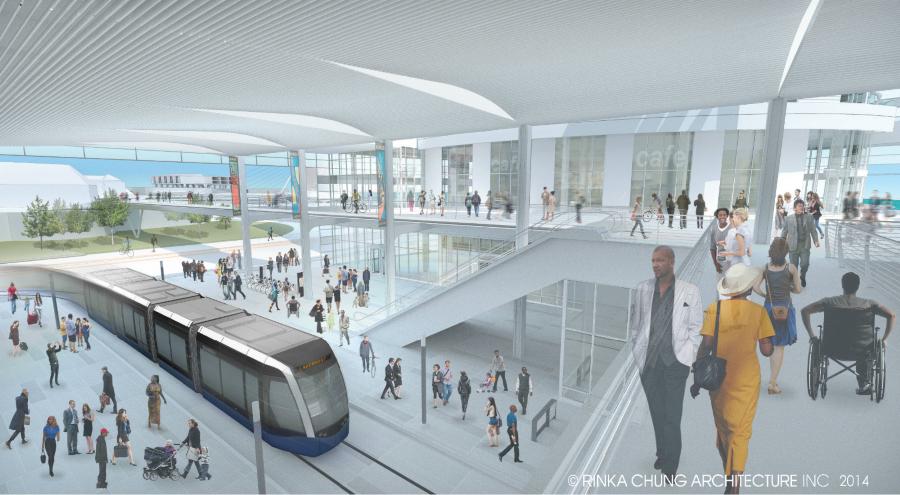
Talk about a missed opportunity....
The system would have benefited from the city's condo-and-loft boom, a resurgent Milwaukee Brewers' ball club, the successful Potawatomi Bingo Casino and an expanding Milwaukee Regional Medical Center.
Extensions to Milwaukee's north side and the University of Wisconsin-Milwaukee would have generated support, and light rail could have assisted Waukesha County commuters because years of Zoo Interchange and I-94 reconstruction are planned west of Milwaukee.


Monday, January 19, 2015

Streetcar foes need to stop saying $$ can be re-purposed

Just as the Federal Amtrak funding Walker turned back could not be used in Wisconsin to pay for roads, the streetcar grant now earmarked for Milwaukee streetcars cannot be repurposed to other transportation projects.

For the umpteenth time:
[US Rep. Gwen] Moore said that federal officials declared that grant funds "could be used only for Milwaukee's streetcar project," meaning it "isn’t possible" to redirect the money to "other modes of public transportation or to our public schools."
Current law, and grant contracts, tie the grant money specifically to the streetcar project.
In theory, Congress could intervene and re-purpose the funding, but there’s far from any guarantee that would happen -- or that Milwaukee would be re-awarded the money if it did. In any case, we can only base our rating on where things stand today, not where they might stand under different scenarios.
We rate Moore’s claim True.

Monday, July 11, 2011

This Is The Week To Push The Streetcar Plan, Milwaukee

Milwaukee's Common Council will decide this week whether to move the downtown streetcar plan forward, so let's get involved and help make it happen.

Check out www.themilwaukeestreetcar.org and attend a public information meeting at the Public Market on Water and St Paul Monday July 11 from 4 to 6 p.m. 

Make sure you email support to mayor@milwaukee.gov with copies to Council Pres. Willie Hines at whines@milwaukee.gov and Alderman Michael Murphy at mmurph@milwaukee.gov
Here are major benefits to the long-delayed system:
Transportation:

·         Improves transit mobility to and between key residential, employment and activity centers.
·         Maximizes transit accessibility and choices for residents, employees, and visitors.   Accessible, low floors for level boarding for disabled, elderly, strollers, bikes.   Service every 10-15 minutes.
·         Has increased transit use in general in cities where it has been added to complement the existing bus system.  
·         Provides a downtown core starter system that can be expanded in the future to provide a larger more effective transit network  (NW to 30th Street Industrial corridor; NE to Columbia St Mary’s UWM; West to Marquette, Miller Park, Research Park; S through Walkers Point, Bay View to airport; SW to Jackson Park.)

Connectivity: 

Within ¼ mile of initial route and extensions:
·         100% of downtown hotel rooms
·         91% of occupied 1st floor retail./commercial space
·         90% of occupied office space
·         77% of downtown housing units
·         77% of total downtown public parking facilities and lots
·         Intermodal station (currently serves 1.4 million annually)

Economic Development:

·         Cities use fixed-guideway transit like streetcars as city building tools to focus and direct economic development. Cities like Seattle, Minneapolis, Cleveland and Portland have all seen substantial development occur within close proximity of their systems.  
·         City land use development analysis identified economic development potential within ¼ mile of initial route and extensions could be 9,000 new housing units, 1,000,000 square feet of new retail space, 4,000,000 million square feet of new office, $3.35 billion of new development value over 20 years.   

Jobs:

·         Streetcar supports 80,000 existing downtown employees providing convenient link between offices, services, and destinations.
·         Construction estimated to create or support 475 construction jobs, 150 jobs related to the manufacturing of the vehicles; 35 permanent operation and maintenance jobs.
·         Local employers such as Rockwell Automation and Milwaukee Composites are manufacturing vehicle parts for streetcars currently being sent to other cities for assembly.        

Other:

·         Provides an environmentally responsible transportation alternative that is energy-efficient, quiet and clean.
·         Attracts and retains young talent supporting the creative class.
·         Enhances Milwaukee’s image as a world-class city.
·         The Streetcar starter system creates city-wide benefits