COLA and the LCO Tribe Need Your Help
|
|
RE: Need Your Help Getting Cause of “Impairment” listed for Lac Courte Oreilles
Action Requested: Send letter to WDNR
Deadline: December 29, 2017
Dear COLA Members,
COLA really needs your help, which is why we are sending this message to you once again. If you've already sent your comments to the WDNR, many, many thanks!
If you haven't sent your comments, please read on!
On November 15, 2017, the WI Department of Natural Resources (WDNR) issued a notice soliciting public comments on its proposed 2018 list of Impaired Waters. The WDNR is proposing to list all of Lac Courte Oreilles as impaired—which is a good thing. But, they are proposing to list “low dissolved oxygen” (DO) as an indicator of that impairment without citing Total Phosphorus as the cause of the impairment. We just need a final push from COLA members to get that correct cause listed as well. Most of the other 240 impaired waters have a cause listed, but not Lac Courte Oreilles. Letters from COLA members can help correct this.
*The deadline for this “public comment” is December 29, 2017. See details under “What you can do” below.
|
|
Why it’s GOOD to be designated as impaired
This is also a good time to repeat that COLA welcomes the designation for Lac Courte Oreilles as an impaired water because it qualifies the lake for both attention and improvement by the U.S. EPA and WDNR under both federal and state law. Now this focus will apply to the whole lake, not just Musky Bay. What happens in Musky Bay happens to the lake as a whole. We know this, and now the WDNR acknowledges it as well.
For background, in 2014 Musky Bay was included on the list of Wisconsin impaired waters based on phosphorus levels exceeding state standards. As we know, this was a partial solution to a much bigger problem. Now the full solution is in the works. See the 2018 WisCALM Assessment for Lac Courte Oreilles.
One remaining issue – and how to fix it
Again, while the WDNR will list all of Lac Courte Oreilles as an impaired water, it still will not identify Total Phosphorus in the lake as the cause of the low DO impairment. Instead, WDNR proposes to list “low DO” as an indicator of impairment. But, if the WDNR does not list the correct cause of the impairment, it cannot act to correct it.
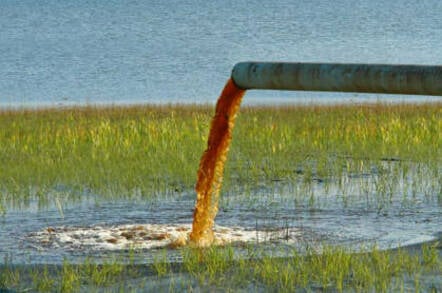
It is documented and verified that too much phosphorus, a nutrient, discharged into the lake is causing the massive growth of algae and algal mats and excess aquatic plant growth, including invasive species like curly leaf pond weed. Dissolved oxygen is then “depleted” from the water when the algae and other plants die and “consume” all the DO in the decomposition process. When this happens, fish species—particularly the cisco and whitefish—literally suffocate and die off. Remember the huge fish kill in Aug/Sept 2016 and the algae bloom in November. |
|
What you can do:
. Send the WDNR the attached letter or email
This letter does two things: (1) Supports the WDNR proposal to list the entire lake as impaired and (2) Asks the WDNR to list the real reason our lake is impaired—Total Phosphorus.
. Meet the Deadline—Send your letter or email by December 29, 2017
The following is from the WDNR: “Public comments may be submitted by December 29, 2017, and can be emailed to DNR at DNRImpairedWaters@wisconsin.gov, or sent by U.S. mail to Ashley Beranek, DNR, Water Evaluation Section (WY/3), Box 7921, Madison, WI 53707. Comments postmarked or received by December 29, 2017, will be considered before submitting the final draft list to the U.S. Environmental Protection Agency for approval.”
If you have any questions
Please contact Gary Pulford, COLA Vice President, at garylindapulford@charter.net.
P.S. Let’s double our success from the first time!
COLA members sent emails to the Wisconsin Department of Resources in 2012 to get Musky Bay declared as an impaired water. This was a great success—it got us to this next important step. This time let’s double that. Send the attached letter or email to the WDNR at the addresses listed above to request that impairment of—and attention for—our lake include Total Phosphorus as the leading cause. |
|
Contact: Jim Coors COLA Communications Dir.
|
|
|
RE: Need Your Help Getting Cause of “Impairment” listed for Lac Courte Oreilles
Action Requested: Send letter to WDNR
Deadline: December 29, 2017
Dear COLA Members,
COLA really needs your help, which is why we are sending this message to you once again. If you've already sent your comments to the WDNR, many, many thanks!
If you haven't sent your comments, please read on!
On November 15, 2017, the WI Department of Natural Resources (WDNR) issued a notice soliciting public comments on its proposed 2018 list of Impaired Waters. The WDNR is proposing to list all of Lac Courte Oreilles as impaired—which is a good thing. But, they are proposing to list “low dissolved oxygen” (DO) as an indicator of that impairment without citing Total Phosphorus as the cause of the impairment. We just need a final push from COLA members to get that correct cause listed as well. The other 240 impaired waters have a cause listed, but not Lac Courte Oreilles. Letters from COLA members can help correct this.
*The deadline for this “public comment” is December 29, 2017. See details under “What you can do” below.
|
|
|





.jpg)


